Ukrainian confectioner Lukas applied to register the word mark SWIPE, the name under which it sells chocolate bars and candies. The examiner refused: the register already held the composite mark SWIPE MOLASSES, filed earlier and covering, among other things, class 30 goods. The Appeals Chamber of UANIPIO overturned the refusal: the marks differ as a whole, and consumers already link SWIPE bars and candies with their maker. The argument that the earlier mark is actually used for entirely different products was left aside — that, the Board said, is for a court.
Decision of the Appeals Chamber of 4 November 2026, approved by Order No. 391/2026 of 17 November 2026. The UANIPIO decision of 27 July 2026 refusing the mark SWIPE, application No. m 2024 21062, was set aside, and the mark is to be registered for class 30 goods “sweets; candies”.
The parties and the marks
- The sign: the word SWIPE in bold capital Latin letters, no colour claimed; application No. m 2024 21062 of 15 November 2024; as filed, class 30 goods including peanut confectionery, cereal bars, confectionery, croissants, biscuits, sweets and candies;
- The applicant and appellant: Lukas Production and Trading Company PE, a confectionery manufacturer;
- The earlier mark: the composite mark SWIPE MOLASSES, certificate No. 378911 (application No. m 2024 05926 of 22 March 2024, registered on 11 February 2026) for goods in classes 29 and 30 and services in class 35; owned by an individual.
The marks compared
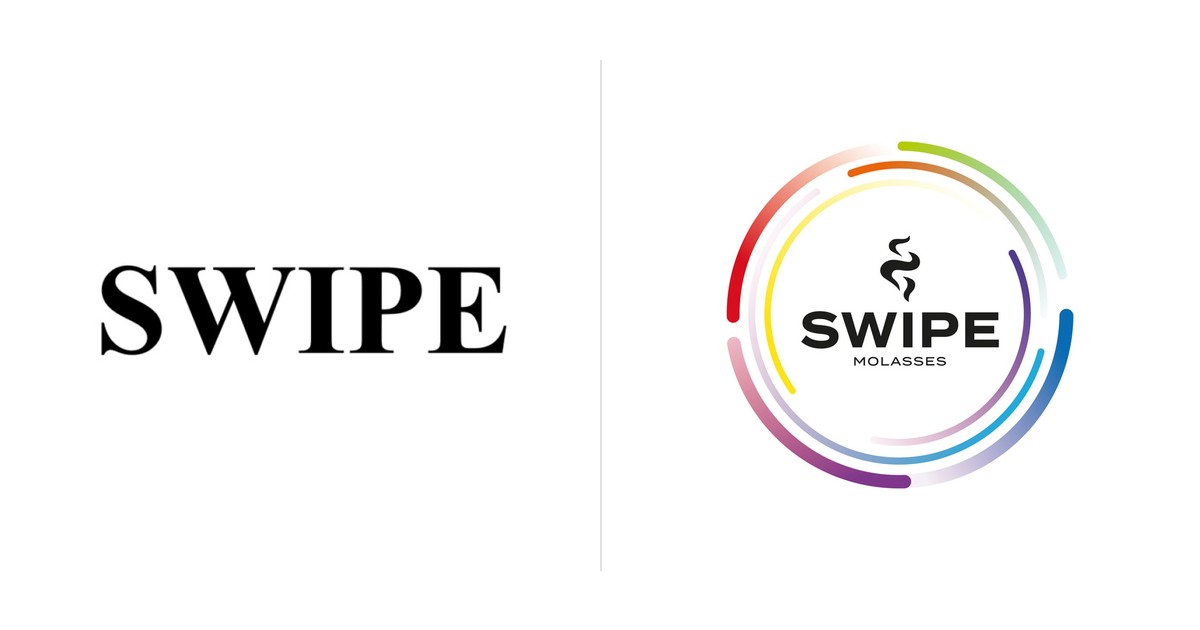
Left — SWIPE, application No. m 2024 21062, Lukas, class 30
Right — SWIPE MOLASSES, certificate No. 378911, classes 29, 30, 35
Images from the UANIPIO register
How the case reached the Appeals Chamber
On 30 April 2026 the examiner issued a provisional refusal: SWIPE was confusingly similar, including by association, to SWIPE MOLASSES for related class 30 goods, because the dominant word elements “SWIPE” coincide. Lukas filed a reasoned response on 25 June 2026, but on 27 July 2026 UANIPIO refused the application for all goods. The ground was paragraph 2 of Article 6(3) of the Law of Ukraine “On Protection of Rights to Marks for Goods and Services” (the Law): a sign cannot be registered if at the filing date it is
“identical with or so similar that it can be confused, including by association, with marks earlier registered or applied for in Ukraine in the name of another person for the same or related goods and services” (our translation).
SWIPE MOLASSES had been filed eight months earlier, on 22 March 2024, so on Lukas's filing date it was already a pending earlier application; it was registered on 11 February 2026.
Lukas appealed to the Appeals Chamber under paragraph 1 of Article 15(1) of the Law. At its request the appeal was heard under the simplified procedure of the Regulation of the Appeals Chamber: on the papers, at a single sitting, without inviting the parties.
Lukas's arguments
- the company has been on the Ukrainian confectionery market for more than 30 years, with around 100 marks protected in Ukraine and abroad;
- SWIPE candies have been on sale since January 2025, with about 20 tonnes sold, supported by marketing;
- the goods in the application and those of the earlier mark are not related;
- judging by its owner's website and Instagram, SWIPE MOLASSES is used for nicotine-free hookah mixes, i.e. for a different consumer group;
- to rule out any overlap, Lukas narrowed its list to “sweets/candies”.
The evidence included printouts from lukas.ua, lukas-sweet.shop and the company's Facebook and Instagram pages about SWIPE bars and candies, a product presentation, and printouts from Google, the SWIPE MOLASSES website and Instagram, threads.com, smokeclub13.com and ChatGPT about SWIPE MOLASSES products.
What the Board found
The Board applied the Rules for filing trademark applications and examining applications and international registrations designating Ukraine (the Rules). Under paragraph 15 of Chapter 2 of Section II of the Rules, a sign is confusingly similar to a mark where
“it is associated with it as a whole, despite individual differences in the elements” (our translation).
Sound: highly similar. SWIPE sounds the same in both signs and is their opening part, which carries the first aural and visual emphasis. Despite the extra word MOLASSES, the Board found a high degree of phonetic similarity.
Appearance: different. SWIPE MOLASSES is two lines of text inside a multicoloured circle of thin arcs, with a black swirl above the letter “I” resembling a stream of smoke or vapour. The substantial differences in composition and colour, the Board held, produce a different visual perception and no overall impression of visual similarity.
Meaning: different associations. According to an English-Ukrainian dictionary, “swipe” means to hit hard or a hard blow, and “molasses” is molasses or black treacle. The Board treated SWIPE as the dominant element of both signs, but found that MOLASSES creates different images and associations, reducing the likelihood of conceptual confusion.
The real market. The Board said that evidence of actual use may matter for establishing the purpose of the goods, the relevant consumers, the conditions of purchase and how consumers identify the source. Lukas's website describes SWIPE bars and candies with nougat, caramel and milk glaze; they were advertised on Facebook and Instagram and are sold in an online shop. In the Board's view, this allowed it to take into account “a certain degree of its recognition among the interested consumers and the formation of a link between the sign and a specific manufacturer” (our translation).
The Board concluded:
“the established awareness of the relevant consumers of the goods of Lukas — SWIPE bars and candies — taking into account the differences found between the signs, rules out the likelihood of their confusion by consumers” (our translation).
From this the Board inferred that there were no grounds to treat the goods as related and that the signs were not confusingly similar, so the refusal ground under paragraph 2 of Article 6(3) of the Law did not apply.
Non-use is not for the Appeals Chamber. To the argument that SWIPE MOLASSES is used for hookah mixes rather than class 30 goods, the Board responded by referring to Article 18(4) of the Law: early termination for non-use is decided by a court. In the Board's words:
“the presence or absence of circumstances confirming non-use in Ukraine of a trademark in respect of all or part of the goods and services listed in the certificate can be established only in court proceedings” (our translation).
That evidence was therefore disregarded.
What the decision does not say. It contains no separate comparison of “sweets; candies” with goods in the SWIPE MOLASSES list such as “pralines”, “pastilles (confectionery)” or “fruit confectionery”: the finding that the goods are not related follows from the finding on overall impression and consumer awareness. Nor does it explain how sales from January 2025 relate to the filing date of 15 November 2024, at which similarity is assessed. On these points the decision gives no direct answer.
The outcome
- Lukas's appeal was upheld in full;
- the UANIPIO refusal of 27 July 2026 for application No. m 2024 21062 was set aside;
- SWIPE is to be registered for class 30 goods “sweets; candies”, subject to payment of the publication fee and the state duty for the certificate;
- the decision took effect on approval on 17 November 2026 (Article 15(10) of the Law) and may be challenged in court within two months of receipt (Article 15(9) of the Law);
- the appeal fee is refundable; under paragraph 2 of Article 15(7) of the Law, 50 per cent of the fee is refunded where an appeal is upheld;
- as of 27 November 2026 the UANIPIO register still shows the application at the substantive examination stage; no certificate yet.
Takeaways for brand owners and counsel
A shared word is not the end of the road. Similarity is judged on overall impression; extra words, layout and colours of the earlier mark matter. Where the differences are substantial, a refusal is worth contesting, in the response to the provisional refusal or before the Appeals Chamber. See our note on responding to a provisional refusal in Ukraine.
Narrow the specification to what is actually sold. Lukas kept only “sweets; candies”, and those are the goods it will be registered for. A narrow list leaves less room for citations.
Keep evidence of use. The Board relied on website pages, social media advertising, the online shop and sales volumes to identify the relevant consumers and the link between the name and its maker. The earlier the evidence is dated, the more weight it carries.
Non-use of an earlier mark belongs in court. It will not work before the Appeals Chamber, and in court it becomes available only after five years of non-use counted from publication of the grant; for SWIPE MOLASSES, registered on 11 February 2026, not before 2031.
Search before launch. SWIPE MOLASSES was filed eight months before SWIPE. A clearance search in Ukraine before filing shows such risks in advance.
Our view
This is our assessment, not the Board's finding. The decision is useful for applicants refused over a word shared with a composite mark: the Board looked at the overall impression and the actual market rather than the coinciding word alone. We saw a similar approach in Winter fresh. Still, we would not treat the outcome as a rule. The goods were not compared item by item, and the evidence of use concerns a period after the filing date. A safer position is a narrow specification from the outset and evidence of use dated before filing.
If a Ukrainian refusal stands in your client's way
We prepare responses to provisional refusals, appeals to the Appeals Chamber of UANIPIO and clearance searches for marks entering Ukraine.
Send us the mark and the refusal — we will tell you what we see. Or write to office@rivnepatent.ua.
Questions we are asked about this case
Will a Ukrainian application be refused if the same word is already part of an earlier mark?
Not necessarily. Under paragraph 2 of Article 6(3) of the Law of Ukraine "On Protection of Rights to Marks for Goods and Services", a sign cannot be registered if it is so similar to an earlier mark registered or applied for in Ukraine by another person for the same or related goods and services that it can be confused with it, including by association. The signs are compared as a whole. In the SWIPE case the Board accepted that the shared word gave a high degree of phonetic similarity, but held that the additional word MOLASSES, the multicoloured circle and the smoke device create a different overall impression.
Can non-use of the earlier mark be argued before the Appeals Chamber?
No. The Board held that non-use can only be established by a court, in an action for early termination of the certificate, and disregarded that evidence. Under Article 18(4) of the Law of Ukraine "On Protection of Rights to Marks for Goods and Services", such an action is available where the mark has not been used continuously for five years from publication of the grant of the certificate, or where use has been suspended for a continuous five-year period.
Does evidence of sales and advertising help on appeal?
In the SWIPE case it did. The Board said that evidence of actual use may matter for establishing the purpose of the goods, the relevant consumers and the conditions of purchase. The manufacturer's website, advertising on Facebook and Instagram and sales in its online shop allowed the Board to take into account a certain degree of recognition of SWIPE bars and candies and the link between the sign and the manufacturer.
Can the list of goods be narrowed during the appeal?
Yes. In its appeal Lukas limited the class 30 list to "sweets; candies", and the Board examined the appeal on the basis of that narrower list. The mark is to be registered for exactly those goods.
What is the simplified procedure, and is the appeal fee refunded?
The Regulation of the Appeals Chamber provides for a simplified procedure: in the SWIPE case, at the appellant's request, the Board decided the appeal on the papers at a single sitting without inviting the parties. If an appeal is upheld in whole or in part, 50 per cent of the appeal fee is refunded (paragraph 2 of Article 15(7) of the Law of Ukraine "On Protection of Rights to Marks for Goods and Services").
Sources: decision of the Appeals Chamber of UANIPIO of 4 November 2026 on the appeal against the refusal of the mark under application No. m 2024 21062, approved by Order No. 391/2026 of 17 November 2026 (full text, in Ukrainian); application No. m 2024 21062 and certificate No. 378911 in the UANIPIO register as of 27 November 2026. Quotations are our translation. Provisions are cited from the Law of Ukraine “On Protection of Rights to Marks for Goods and Services” as in force from 26 February 2026, the Rules as in force from 18 September 2024 and the Regulation of the Appeals Chamber.
Decisions of the Appeals Chamber are public documents, published among other things so that the practice can be studied. This note analyses the reasoning of the decision — the arguments raised and how the Board assessed them — not the procedural history of the case. It contains no assessment of the conduct of the parties or their representatives. Rivnepatent did not represent any of the parties. This note is for information only and is not legal advice.
 Author: Volodymyr Tarasiuk, Ukrainian patent and trademark attorney, Reg. No. 529
See also: Winter fresh: a shared word is not similarity · Trademark oppositions in Ukraine