The opposition ran on three fronts at once: two earlier marks sharing a word, a near-identical device, and a well-known mark. All three failed — and the reasoning is a useful map of how Ukrainian practice weighs each of them.
Decision of the Appeal Chamber of UANIPIO of 19 June 2026, approved by order No. 255/2026 of 11 September 2026. The composite sign «Winter fresh», application No. m202211571, remains registered for class 3 goods.
The parties and the marks
- Applicant: a Ukrainian individual; «Winter fresh» (fig.) — white italics on a dark oval, class 3;
- Opponents: a Cypriot company and a Ukrainian individual, owners of «SUPER FRESH» (No. 115397, word) and «Superfresh» (No. 147649, composite), plus the well-known mark «Smile» (fig.);
- Goods: wet wipes and cosmetics — the same market on both sides.
The signs the Board compared
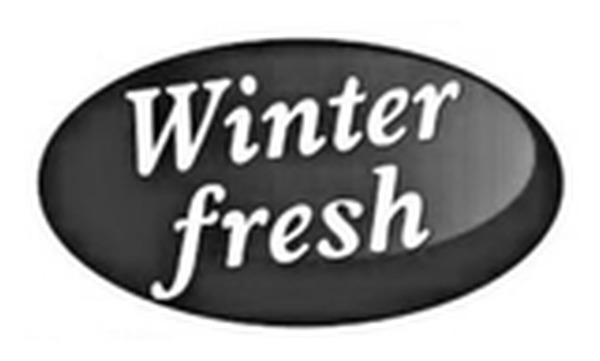
Applied for
«Winter fresh» (fig.), application No. m 2022 11571
class 3 — registration upheld

Earlier mark
«SUPER FRESH», certificate No. 115397
word mark, classes 3 and 5

Earlier mark
«Superfresh», certificate No. 147649
composite, class 3

Well-known mark
«Smile» (fig.), certificate No. 186047
well known in Ukraine since 31.12.2014
Reproductions of the signs as they appear in the decision
The opposition was run twice: first as third-party observations during examination, which the examiner rejected before deciding to register; then as an appeal against that decision.
First ground: the shared word
The opponents argued the verbal element dominates all three signs and partly coincides, and that the meanings converge — «super freshness» against «winter freshness».
The Board accepted the coincidence and then explained why it decides nothing.
Phonetically, the comparison was anchored on the beginning, not the ending: «Winter» against «Super» differ in phonemic composition. A shared final element does not remove that difference.
Conceptually, the gap is wider than it looks. «Super» denotes the degree of a quality — extremely, highly. «Winter» denotes the source of the image — cold, the season. One sign says «a lot of freshness», the other «freshness of a wintry kind». Different ideas.
And decisively: «fresh» describes a characteristic of the goods, so it has weak distinctive character and does not determine how the sign is perceived as a whole.
Second ground: the identical oval
Here the opponents relied on their well-known mark: the same ellipse with highlights, the same three-dimensional effect, similar sloping italics, light lettering on a dark ground.
The Board answered on principle: an oval frame and the combination of a dark background with contrasting light lettering are generic design devices. They are not unique and may appear in many different marks, so on their own they do not create a dominant impression.
A further detail shows the level of the analysis: the oval functions differently in each sign. In «Winter fresh» it frames a two-line composition; in «Smile», a single horizontal word.
Third ground: the well-known mark
«Smile» was recognised as well known in Ukraine back in 2016, as at 31 December 2014, for wipes impregnated with cosmetic lotions. That is the strongest form of protection available: it extends even to dissimilar goods where use would indicate a connection with the proprietor.
It did not help. The reason is simple: the signs share no verbal element at all. «Winter fresh» and «Smile» differ in sound and in meaning — a smile against wintry freshness.
And under article 6 bis of the Paris Convention the later sign must be a reproduction, imitation or translation of the well-known mark. A shared geometric shape does not meet that definition.
The point worth carrying away: well-known status widens the range of goods covered, but it does not lower the threshold of similarity. Similarity must be established first; only then does the extended scope operate.
What happened to the expert opinion
The opponents filed a commissioned expert opinion on intellectual property matters.
The Board disregarded it, and explained why. Under the Regulation of the Appeal Chamber, appointing an expert is a power of the Board, not of a party: the Board appoints, either on request or of its own motion. An opinion obtained outside that procedure is not an expert opinion within the meaning of the Regulation.
The Board added that no expert was needed: its members hold specialist qualifications in intellectual property and the file was sufficient.
The same happened in VOSS v Marlboro, where opinions from both sides were disregarded. For foreign counsel budgeting a Ukrainian opposition this is settled practice worth knowing in advance: a privately commissioned report may buy an argument, but not evidence.
And the public policy argument
The opponents also argued the sign was contrary to public policy. The Board addressed that too: the ground covers signs of a pornographic character, anti-state and racist slogans, extremist symbols and obscene words.
A neutral English phrase does not fall within it. The applicant was also right that these are independent grounds which cannot substitute for one another: failing to prove similarity does not open a second route to the same outcome.
Outcome
- the opposition was dismissed in full;
- the decision of 11 April 2024 to register «Winter fresh» (fig.) stands;
- because no similarity was found, the Board did not examine the relatedness of the goods at all.
That last point is instructive: the two limbs run in sequence. No similarity of signs, and the question of goods never arises. Compare the DEKSIL case, where the opposite happened — similarity was confirmed and the case turned on the goods being dissimilar.
Practical points
A shared word is not similarity, particularly a descriptive one. An opposition built on «we also have fresh» will not carry.
The beginning of the word weighs more than the ending. It works both ways: change the opening and you move away from an earlier mark; match it and you move closer.
Generic design devices give no monopoly. Ovals, dark grounds, light italics — everyone uses them. If a brand's visual identity rests only on these, it will be hard to defend.
Well-known status does not remove the similarity stage. It broadens scope; it does not relax the comparison.
A party-commissioned expert report is not evidence before the Appeal Chamber.
If you are clearing or opposing in Ukraine
Class 3 in Ukraine is crowded with fresh, natural, bio and eco. We run clearance searches that account for weak elements, advise on the real prospects of an opposition before it is filed, and represent parties before the Appeal Chamber. More on how we work with IP firms.
Send us the sign and the classes — we will tell you what the Ukrainian register shows and where the risks sit. Or write to info@patent.rv.ua.
Source: decision of the Appeal Chamber of UANIPIO of 19 June 2026 on the opposition against the decision to register the trademark «Winter fresh» (fig.), application No. m202211571, approved by order No. 255/2026 of 11 September 2026. Full text of the decision. The provisions cited are article 5(1) and article 6(3) of the Law of Ukraine on Protection of Rights to Marks for Goods and Services, as in force on 17 September 2026.
Decisions of the Appeal Chamber are public documents, published among other things so that the practice can be studied. This note analyses the reasoning of the decision — the arguments raised and how the Board assessed them — not the procedural history of the case. It contains no assessment of the conduct of the parties or their representatives. Rivnepatent did not represent either party. This material is for information only and is not legal advice.
Author: Volodymyr Tarasiuk, Ukrainian patent and trademark attorney, Reg. No. 529
Source: Decision of the Fourth Board of Appeal of the EUIPO of 10 August 2026 in case R 1791/2025-4 (CRASH birds (fig.) / ANGRY BIRDS et al.), cancellation proceedings No C 66 530, EUTM No 18 950 941. The decision in the EUIPO eSearch Case Law database.
Author: Volodymyr Tarasiuk, Ukrainian patent and trademark attorney, Reg. No. 529
See also: Free Ukrainian trademark search · Madrid designations in Ukraine