The FUSION trademark for oils, lubricants and chemical products is registered in Ukraine to two individuals, and there is no agreement between them on how it may be used. In 2018 one co-owner granted a licence to Nika-Trade LLC without asking the other. The other co-owner sued for an injunction, and the case went up to the Supreme Court three times. On 17 November 2026 the Supreme Court finally dismissed the claim. Meanwhile, in a separate case, the same licence had already been declared invalid. Below we explain how both outcomes fit together and what they mean for anyone who co-owns a trademark in Ukraine.
What happened
The «fusion» trademark is registered under Ukrainian certificate No. 241321 of 10 May 2018 (application No. m201617301 of 10 August 2016) for goods in classes 1 and 4. The certificate has two owners, both individuals. The courts found no agreement between them on the use of the trademark.
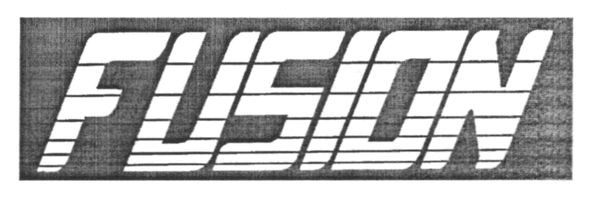
Certificate No. 241321 · filed 10 August 2016, registered 10 May 2018 · Nice classes 1 and 4
On 1 June 2018 one co-owner signed a licence agreement with Nika-Trade LLC: a simple (non-exclusive) licence with the right to sublicense, for any use not prohibited by law, until 1 December 2021. The company imported and sold automotive products under the mark: oils, lubricants, filters, coolant.
The other co-owner never consented. In 2021 he complained to the Antimonopoly Committee of Ukraine, which found no signs of unfair competition by Nika-Trade LLC. In April 2022 he sued in the Dniprovskyi District Court of Kyiv for an order prohibiting the company from using the trademark and from clearing goods bearing it through customs (case No. 755/3412/22).
Three rounds in court
Round one. On 8 August 2022 the first-instance court prohibited Nika-Trade LLC from using the trademark, and on 23 January 2023 the appeal court upheld that judgment. Both relied on Article 16(3) of the Law of Ukraine on Protection of Rights to Marks for Goods and Services (the Law): absent an agreement between co-owners, none of them may grant a licence without the others’ consent.
Round two. On 8 November 2023 the Supreme Court set the appeal ruling aside. It noted that Article 428 of the Civil Code of Ukraine, absent an agreement between co-owners, requires joint exercise of the rights and sets different consequences from Article 16(3) of the Law. It also relied on Article 4(2) of the Civil Code, which, in its view, gives the Code priority over other laws, so Article 428 applies. No rule makes a licence granted by one co-owner void, and the claimant had not asked for the licence to be set aside. On 6 February 2024 the appeal court dismissed the claim.
Round three. On 13 November 2024 the Supreme Court sent the case back again: the appeal court had not checked whether the licence was in force and whether the claimant’s rights were being infringed when the claim was filed. The claimant stressed that the licence had expired on 1 December 2021, while the company’s supply contracts ran until 31 December 2023. On 22 September 2025 the appeal court dismissed the claim once more: under supplementary agreements of 2020–2021 the suppliers had switched to a different designation, and the claimant had produced no evidence of use of the trademark after 1 December 2021.
What the Supreme Court decided on 17 November 2026
The Supreme Court upheld the appeal ruling. The resolution contains three key findings.
The licence is not void. The panel agreed that a non-exclusive licence concluded by one co-owner without the direct participation of the other is not void. Nobody had challenged it or had it set aside by a final judgment, so during its term Nika-Trade LLC used the trademark lawfully.
Use after the licence was not proved. The claimant relied on contracts valid until the end of 2023 and on supplementary agreements allowing remaining stock bearing the trademark to be supplied until the supplier’s warehouse ran out. The court held that the mere possibility of such supplies does not prove use of the trademark on the date of the claim, 27 April 2022, because proof cannot rest on assumptions. The defendant, for its part, produced invoices for goods under a different trademark.
A later judgment was not taken into account. On 6 June 2025, in a separate case, a court declared the licence invalid. The claimant asked the appeal court to stay his case until that judgment became final. The appeal court refused, and the Supreme Court agreed: an appeal reviews the first-instance judgment within the circumstances that existed when the first-instance court heard the case, and a judgment of 2022 could not take account of events of 2025. The Supreme Court also rejected the allegation of bias against the appeal judges. The resolution is final.
The parallel case: the licence was set aside
In May 2024 the same co-owner filed a separate claim against Nika-Trade LLC and the other co-owner to have the licence of 1 June 2018 declared invalid and to recover damages (case No. 755/8770/24). On 6 June 2025 the Dniprovskyi District Court of Kyiv declared the licence invalid. On 24 December 2025 the Kyiv Court of Appeal upheld that part of the judgment and awarded UAH 150,000 in non-pecuniary damages against the company. It refused an injunction because there was no evidence of use in the relevant period; lost profits had already been refused at first instance.
The appeal court held that, without evidence of the co-owners’ joint will, the licence infringed the other co-owner’s rights. In its view the agreement was voidable, not void. It rejected the company’s arguments about an oral arrangement between the co-owners and about the licensor’s assurance that the other co-owner agreed: an assurance does not replace consent, and the risk of contracting with a person lacking authority lies with the counterparty. On 22 June 2026 the Supreme Court opened cassation proceedings on Nika-Trade LLC’s appeal. As of 25 November 2026 the Unified State Register of Court Decisions contains no Supreme Court ruling on the merits in that case.
What the law says now
Article 16(3) of the Law in its current version (of 26 February 2026) differs from the text the courts applied only in terminology: «Relations in the use of a trademark whose certificate belongs to several persons are determined by an agreement between them. In the absence of such an agreement, each owner of the certificate may use the trademark at its discretion, but none of them has the right to grant permission (issue a licence) to use the trademark or to transfer the right to the trademark to another person without the consent of the other owners of the certificate» (our translation).
Article 428 of the Civil Code of Ukraine: «An intellectual property right belonging to several persons jointly may be exercised under an agreement between them. In the absence of such an agreement, an intellectual property right belonging to several persons is exercised jointly». Article 204 of the Code sets the presumption: «A transaction is lawful unless its invalidity is expressly established by law or it has been declared invalid by a court» (our translation). Together these rules explain the outcome: a licence granted without a co-owner’s consent breaches the law but remains effective until a court sets it aside.
The register today
As of 25 November 2026 certificate No. 241321 is shown in the state register as «in force», with the same two individuals as owners. The expected expiry date of the registration is 10 August 2026. On 15 September 2026 the office sent a notice that the certificate will lapse if the fee is not paid. Under Article 18(2) of the Law the renewal fee may still be paid and the renewal request filed within six months after the deadline, with the fee increased by 50 per cent.
Lessons for brand owners and their counsel
- Co-owners should sign an agreement at the filing stage. Who uses the trademark, who may license it and on what terms, how income is shared, who pays for renewal. Without it Ukrainian law requires joint consent for each step.
- A licensee needs the consent of every owner of the certificate. Check the register for the number of owners and obtain each one’s written consent. According to the appeal court, one co-owner’s assurance is not enough.
- A bypassed co-owner should not rely on an injunction alone. Until the licence is set aside, the licensee’s use is lawful. The licence itself has to be challenged first, or at the same time.
- Evidence of use is needed as of the date of the claim. Contracts that merely allow supplies were not accepted as proof of actual use.
- New circumstances cannot be added on appeal. A judgment issued after the first-instance ruling was not taken into account.
- Check the register before signing a licence. Who owns the certificate, whether it is in force and when it expires. See our note on assignments and licences in Ukraine.
Our view
This is our assessment, not the court’s finding. One licence, two cases, two different results: in one the co-owner lost his injunction claim, in the other he had the licence set aside and won non-pecuniary damages. There is no contradiction. The courts read co-ownership the same way: a licence without the other co-owner’s consent infringes his rights but does not cease to have effect by itself. The difference lies in the remedies: an injunction looks to the future and needs proof that infringement continues, while a licence can be declared invalid even after its term has ended.
Whether the invalidity finding and the damages award stand will be decided by the Supreme Court in case No. 755/8770/24. For foreign licensees the practical point is already clear: when a Ukrainian trademark has several owners, the consent of all of them is the first document to ask for.
If your client licenses a co-owned trademark in Ukraine
We check the Ukrainian register for all owners of the certificate and its status, draft co-ownership and licence agreements, and record licences with the Ukrainian office. If a licence has already been granted without a co-owner’s consent, we can assess what to challenge and in what order. Information for foreign attorneys.
Send us the details — we will check the register and outline the options. Or write to office@rivnepatent.ua.
Questions we are asked about this case
Can one co-owner of a Ukrainian trademark grant a licence without the other?
Not unless the co-owners have an agreement allowing it. Under Article 16(3) of the Law of Ukraine on Protection of Rights to Marks for Goods and Services, absent an agreement each co-owner may use the trademark at its discretion, but none may grant a licence without the consent of the other owners of the certificate. Article 428 of the Civil Code of Ukraine requires jointly owned rights to be exercised jointly unless the co-owners agree otherwise.
Is such a licence void in Ukraine?
No. In its resolution of 17 November 2026 in case No. 755/3412/22 the Supreme Court agreed that a non-exclusive licence granted by one co-owner without the other is not void: the law does not expressly declare it invalid, so the presumption of validity of transactions (Article 204 of the Civil Code of Ukraine) applies. The licence can be challenged and set aside by a court; until then the licensee uses the trademark lawfully.
What can the co-owner who did not consent do?
Challenge the licence itself. In case No. 755/3412/22 the injunction claim failed because the licence had not been set aside and the courts found no evidence of use after the licence expired. In separate case No. 755/8770/24 the same co-owner had the licence declared invalid at first instance and on appeal and was awarded UAH 150,000 in non-pecuniary damages against the licensee; as of 25 November 2026 that case is pending before the Supreme Court.
Does the licensor’s assurance that the other co-owner agrees protect the licensee?
According to the Kyiv Court of Appeal (resolution of 24 December 2025 in case No. 755/8770/24), no: a co-owner’s assurance does not replace the other co-owner’s consent, and the risk of contracting with a person lacking authority lies with the counterparty. A licensee should obtain written consent from every owner of the certificate, or an agreement between them that authorises one of them to license. That resolution is under appeal to the Supreme Court.
Can a later judgment be relied on for the first time on appeal?
Not in case No. 755/3412/22. The co-owner asked the appeal court to take into account a judgment of 6 June 2025 setting the licence aside, but the first-instance judgment in his case dated from 8 August 2022. The Supreme Court agreed that under Article 367 of the Civil Procedure Code of Ukraine the appeal court reviews the judgment within the circumstances that existed when the first-instance court heard the case, so evidence that did not exist then is not admitted.
Sources (in Ukrainian): resolution of the Supreme Court of 17 November 2026 in case No. 755/3412/22 (it summarises the earlier rulings in the case); resolution of the Supreme Court of 8 November 2023; resolution of the Supreme Court of 13 November 2024; resolution of the Kyiv Court of Appeal of 22 September 2025; resolution of the Kyiv Court of Appeal of 24 December 2025 in case No. 755/8770/24; Supreme Court ruling of 22 June 2026 opening cassation proceedings; certificate No. 241321 in the state register as of 25 November 2026; Law of Ukraine on Protection of Rights to Marks for Goods and Services (version of 26 February 2026); Civil Code of Ukraine (version of 5 August 2026); Civil Procedure Code of Ukraine (version of 25 November 2026). Quotations are our translation. Names of individuals are not given: they are anonymised in the court decisions.
Court decisions are public documents, published in the Unified State Register of Court Decisions. This note analyses the reasoning of the decision — the arguments raised and how the court assessed them. It contains no assessment of the conduct of the parties or their representatives. Rivnepatent did not represent either party. This material is for information only and is not legal advice.
 Author: Volodymyr Tarasiuk, Ukrainian patent and trademark attorney, Reg. No. 529
See also: Assignments and licences in Ukraine · CRICOVA: a brand registered to someone else