Since 2002 the CRICOVA trademarks in Ukraine have been registered not to the Moldovan winery Combinatul de Vinuri «CRICOVA» but to an individual — with the winery's own permission and «with subsequent assignment of the rights». The rights were never transferred. Over the years the winery lost a claim to invalidate the certificates, lost a claim to «terminate the right of ownership» at two instances, and on 16 September 2026 the Supreme Court sent the case back for a new hearing — setting out an important position on how someone else's trademark rights can be terminated at all.
How it started
The winery owns trademarks in the Republic of Moldova which, according to the facts established by the courts, have been protected since 18 March 1993. In Ukraine the first two applications for CRICOVA were filed on 2 September 2002 — in the name of an individual (anonymised in the court decisions as PERSON_1). Certificates No. 31977 and No. 31978 were issued on 15 May 2003 for goods in class 33 and services in class 35.
The basis was the winery's information letter No. 17/772 of 2 October 2002 addressed to the head of the trademark examination division of the then State Enterprise «Ukrainian Industrial Property Institute». In it the winery «instructs and permits registration of the mark CRICOVA in the territory of Ukraine» in that individual's name «with subsequent assignment of the rights» to the winery. The letter was signed only by the winery's director general.
On 13 December 2007 the winery concluded exclusive distribution agreement No. 22-V with Ukrimport KV LLC, together with supplementary agreement No. 01. Clause 2(d) of the supplementary agreement provided that PERSON_1, as chairman of the company's board of directors, on behalf of the company «and in the capacity and on behalf of the individual», would ensure the assignment to the winery of all rights in the CRICOVA marks registered in his name — on first demand, but no later than the expiry of the agreement, and provided that the winery reimbursed all his documented costs of registration and assignment.
Between 2012 and 2019 six more certificates for CRICOVA were registered to the same individual, all in class 33. On 23 June 2016 the winery demanded the assignment in writing. The assignment never took place.
The eight CRICOVA certificates according to the state register
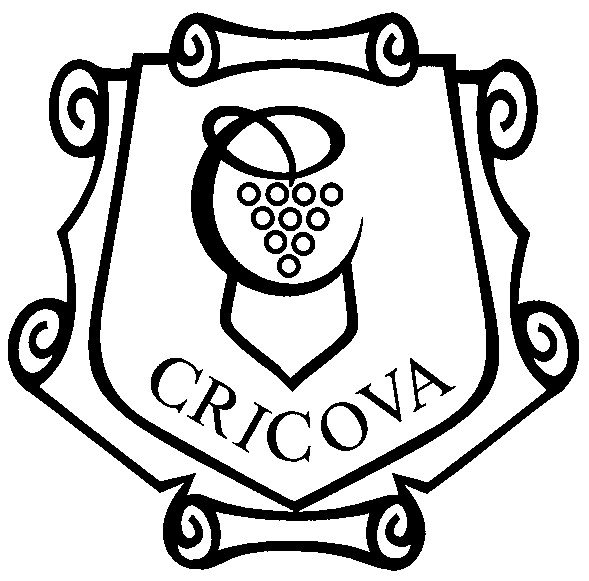
No. 31977 · 15.05.2003
classes 33, 35 · valid until 02.09.2032

No. 31978 · 15.05.2003
classes 33, 35 · valid until 02.09.2032

No. 152770 · 12.03.2012
class 33 · valid until 21.02.2031

No. 214944 · 10.08.2016
class 33 · valid until 20.02.2035
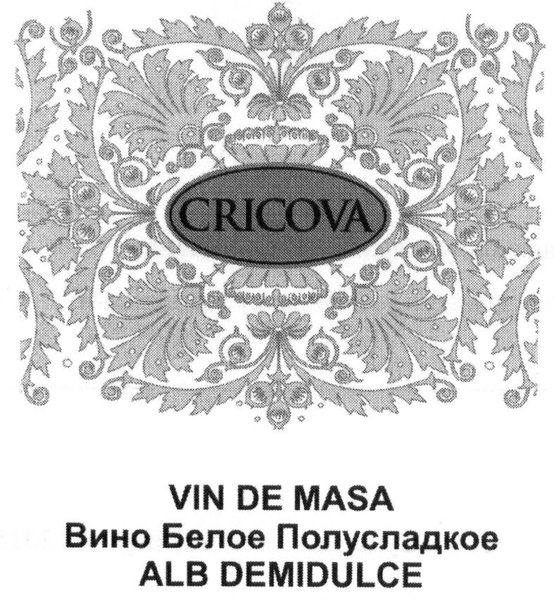
No. 215574 · 25.08.2016
class 33 · lapsed since 12.03.2025
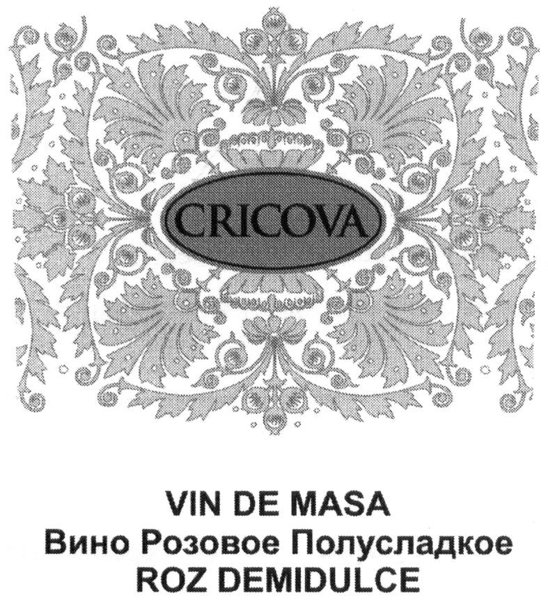
No. 215575 · 25.08.2016
class 33 · lapsed since 12.03.2025
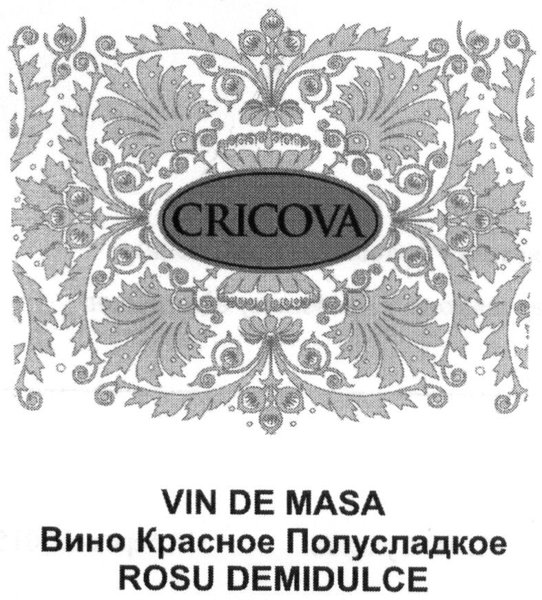
No. 215576 · 25.08.2016
class 33 · lapsed since 12.03.2025
No. 263991 · 27.08.2019
class 33 · valid until 05.10.2027
The first claim: invalidate the certificates
First, nine months went into establishing which court should hear the dispute at all. The Commercial Court of the City of Kyiv, by ruling of 16 March 2021 in case No. 910/3597/21, refused to open proceedings, finding that the dispute belonged to civil jurisdiction. The Prymorskyi District Court of Odesa, by ruling of 26 May 2021, refused as well — on the ground that the dispute was commercial. Only the Odesa Court of Appeal, by resolution of 22 December 2021, decided that the case should be heard by a general court in civil proceedings, because the certificates are owned by an individual. Proceedings were opened on 24 June 2022.
In case No. 522/7802/21 the winery sought invalidation of all eight certificates. The main ground was article 6septies of the Paris Convention for the Protection of Industrial Property: where an agent or representative of the owner of a mark in one Union country registers it in his own name without the owner's authorisation, the owner may demand cancellation or transfer of the registration. The winery argued that Ukrimport KV LLC had been its commercial agent. The second ground was article 19(4) of the Law of Ukraine on Protection of Rights to Marks for Goods and Services (the Law), added by Law No. 815-IX of 21 July 2020: the owner of a mark in a foreign state may seek invalidation of the Ukrainian certificate or transfer of the rights if they were acquired without his consent by his agent or representative.
By judgment of 27 June 2023 the Prymorskyi District Court of Odesa dismissed the claim. The court found that:
- the registration was made with the winery's own written permission, so the condition «without the owner's authorisation» was not met;
- the commercial intermediary relationship existed between the winery and Ukrimport KV LLC, while the certificates belong to the individual, who acted as an officer of the company and not in his own name; the winery did not produce any distribution agreement with him directly;
- the first two certificates were issued in 2003, long before the 2007 distribution agreement;
- article 19(4) of the Law does not apply to these certificates: compliance of a mark with the conditions for registration is assessed under the law in force on the filing date, and this provision only appeared in 2020;
- none of the winery's international registrations it relied on extends to the territory of Ukraine.
The judgment became final on 17 August 2023 — as stated in the court's decision in the next case.
The second claim: «terminate the right of ownership»
In February 2024 the winery filed a new claim — case No. 522/3068/24. The relief sought was to terminate the defendant's right of ownership of the intellectual property rights in the CRICOVA trademarks under all eight certificates. The ground was the 2002 letter and the 2007 supplementary agreement, which the defendant had not performed.
By judgment of 2 October 2024 the Prymorskyi District Court of Odesa dismissed the claim on several independent grounds:
- the 2002 letter is a unilateral act of the winery: it was signed only by the winery's director, addressed to the examination division and not to the defendant, and there is no evidence that the defendant agreed to undertake an obligation to assign;
- the 2007 supplementary agreement was signed only by authorised representatives of two legal entities; it bears no signature of the defendant as an individual, he is not named among the parties, and under article 511 of the Civil Code of Ukraine an obligation does not create duties for a third party;
- under the agreement the assignment was conditional on the winery reimbursing all costs, and the file contains no evidence of such reimbursement;
- under article 419 of the Civil Code of Ukraine intellectual property rights and the right of ownership of a thing are independent of each other, so a demand to «terminate the right of ownership of an intellectual property right» is provided for neither by law nor by contract.
The winery was ordered to pay the defendant UAH 25,000 in legal costs — out of UAH 168,744 claimed.
The Odesa Court of Appeal, by resolution of 11 June 2025, varied the judgment: it removed from the reasoning the finding that the claims were unproven and kept a single ground for dismissal — an improper remedy. In the appellate court's view this is an independent ground that does not require establishing whether the claims are proven. The winery did not appeal the part on legal costs.
What the Supreme Court said
By resolution of 16 September 2026 the Supreme Court partly allowed the cassation appeal: it set aside the appellate resolution and remitted the case to the court of appeal for a new hearing. The reasoning is worth reading carefully, because it concerns more than CRICOVA.
First, under Section V of the Law, intellectual property rights in a trademark may be terminated only by termination of the certificate or by declaring it invalid. The grounds for termination of a certificate are exhaustively set out in article 18 of the Law and do not include termination for non-performance of a contract.
Second, this special procedure cannot be bypassed simply by recasting the claim as «termination of a legal relationship»: otherwise the general rule of article 16 of the Civil Code of Ukraine would be used to circumvent the special one. If the claimant's aim is to deprive the defendant of trademark protection, an abstract «termination of a legal relationship» does not replace the specific claim for termination of the certificate.
Third — and this is why the case was sent back — if the claimant seeks to terminate a specific existing legal relationship between it and the defendant connected with the use or disposal of the trademark, clause 7 of part 2 of article 16 of the Civil Code of Ukraine may be an independent basis. Provided that such a relationship actually exists and its termination produces the required legal result.
According to the Supreme Court, the court of appeal did not establish this: what legal relationship exists, between whom, what it arose from, which right of the claimant was infringed, what the ground for termination is, whether a special law provides a different remedy, and whether the judgment would restore the infringed right.
What the Supreme Court did not decide
The resolution does not answer the question of who the CRICOVA trademarks should belong to. The Supreme Court did not assess the signatures on the supplementary agreement, the cost-reimbursement condition or the content of the 2002 letter — establishing facts is outside its powers.
Nor is there a direct answer on the dispute about how the claim was worded. The claimant sought to terminate precisely the «right of ownership»; UANIPIO argued in its response that the law clearly separates the right of ownership from intellectual property rights; the first-instance court answered with article 419 of the Civil Code of Ukraine. In its reasoning the Supreme Court speaks of a «legal relationship» and of trademark protection, but does not separately assess the «right of ownership» wording.
The pleas of the defendant and the company that the limitation period had expired — they argued that the winery had known of the infringement since at least 23 June 2016 — were not considered on the merits either by the first-instance court in 2024 or by the court in 2023, as both dismissed the claims on other grounds.
The register today
As of 23 September 2026 all eight certificates in the state register belong to the same individual. Certificates No. 31977 and No. 31978 were renewed on 19 January 2024 until 2 September 2032 — that is, during the dispute, a few weeks before the second claim. Certificate No. 214944 was renewed on 20 March 2025 until 20 February 2035. Three certificates — No. 215574, No. 215575 and No. 215576 — lapsed on 12 March 2025 for non-payment of the renewal fee.
Lessons for foreign brand owners
File in your own name. Any «register it in your name and transfer it later» arrangement turns the future transfer into a promise, and the promise into a dispute. Here the first written demand dates from 2016, and the litigation has been running since 2021. A foreign owner can file directly or designate Ukraine through the Madrid System — see our note on Madrid designations in Ukraine.
A letter to the office is not a contract. The court treated the 2002 permission as a unilateral act of the winery which creates no obligations for the person in whose name the mark is registered. An obligation to transfer the rights must be in an agreement with that very person, signed by him.
The distributor's director and the distributor are different persons. The agreement was signed by two legal entities, while the certificates belong to an individual. The courts stressed this twice, and for the same reason the protection against an agent who registers the principal's mark did not work.
Consent defeats the agent remedy. Article 6septies of the Paris Convention and article 19(4) of the Law protect an owner whose agent registered the mark without authorisation. A written permission given at the time closes that door.
A condition you cannot prove blocks everything. The assignment depended on reimbursement of costs, and the file contains no evidence of reimbursement. If such a condition is needed, give it a specific amount, deadline and method of payment.
Choose the remedy before filing the claim. The claim to «terminate the right of ownership» failed at two instances, and «termination of a legal relationship», according to the Supreme Court, is possible only where such a relationship actually exists and the court establishes it.
If your client's mark is registered to someone else in Ukraine
If a Ukrainian registration already sits with a distributor, a former partner or a local representative, an assignment agreement while relations are good is far cheaper than litigation — see our note on assignments and licences in Ukraine. We check the register, advise on the available remedies and handle filings, assignments and disputes. More on how we work with IP firms.
Send us the brand — we will tell you who holds it in Ukraine and what can be done. Or write to office@rivnepatent.ua.
Questions we are asked about this case
What did the Supreme Court decide in the CRICOVA case?
By resolution of 16 September 2026 in case No. 522/3068/24 the Supreme Court set aside the resolution of the Odesa Court of Appeal of 11 June 2025 and remitted the case to the court of appeal for a new hearing. The Supreme Court did not decide the merits — who the trademarks should belong to.
Can trademark rights in Ukraine be terminated for breach of contract?
According to the Supreme Court in this case, trademark rights are terminated only by termination of the certificate or by declaring it invalid, and article 18 of the Law of Ukraine on Protection of Rights to Marks for Goods and Services does not provide for termination of a certificate for non-performance of a contract. At the same time, termination of a specific legal relationship between the parties under clause 7 of part 2 of article 16 of the Civil Code of Ukraine may be an independent remedy, provided such a relationship actually exists and its termination produces the required legal result.
Why could the winery not invalidate the certificates?
In its judgment of 27 June 2023 in case No. 522/7802/21 the Prymorskyi District Court of Odesa rejected the reliance on article 6septies of the Paris Convention for the Protection of Industrial Property and article 19(4) of the Law of Ukraine on Protection of Rights to Marks for Goods and Services: the registration was made with the winery's written permission, the individual was not its agent or representative, and article 19(4) only appeared in 2020 and does not apply to these certificates.
Who owns the CRICOVA trademarks in Ukraine now?
As of 23 September 2026 all eight certificates in the state register belong to one individual. Five of them are in force; three — No. 215574, No. 215575 and No. 215576 — lapsed on 12 March 2025 for non-payment of the renewal fee.
How can a foreign brand owner avoid the CRICOVA situation?
Register the trademark in its own name, directly or through a Madrid designation of Ukraine. If the registration has to go to another person for some reason, conclude the agreement with that very person, signed by him, with an unconditional obligation to transfer the rights and a specific deadline, and draft conditions such as cost reimbursement so that they can be proven.
Sources (in Ukrainian): resolution of the Supreme Court of 16 September 2026 in case No. 522/3068/24; resolution of the Odesa Court of Appeal of 11 June 2025; judgment of the Prymorskyi District Court of Odesa of 2 October 2024; judgment of the Prymorskyi District Court of Odesa of 27 June 2023 in case No. 522/7802/21; resolution of the Odesa Court of Appeal of 22 December 2021; data of the Ukrainian trademark register as of 23 September 2026. The registration date of certificate No. 214944 is given as per the register (10 August 2016, application of 20 February 2015); the 2024 judgment and the Supreme Court resolution give it as 20 February 2016. Names of individuals are not given: they are anonymised in the court decisions.
Court decisions are public documents, published in the Unified State Register of Court Decisions. This note analyses the reasoning of the decisions — the arguments raised and how the courts assessed them. It contains no assessment of the conduct of the parties or their representatives. Rivnepatent did not represent either party. The case has been remitted for a new hearing, and its final outcome is not yet known. This material is for information only and is not legal advice.
 Author: Volodymyr Tarasiuk, Ukrainian patent and trademark attorney, Reg. No. 529
See also: Assignments and licences in Ukraine · Madrid designations in Ukraine