The owner of the WALKER chain of multibrand stores held six Ukrainian registrations, stores in shopping centres of major cities and years of advertising. It still failed to stop the registration of «w walky» for goods in classes 18 and 25, including footwear. The reason lies in what exactly it had been using its name for.
Decision of the Appeal Chamber of UANIPIO of 8 June 2026, approved by Order No. 252/2026 of 8 September 2026. The composite sign «w walky» under application No. m202113242 remains registered for goods in classes 18 and 25.
The parties
- Applicant — CCC.eu Sp. z o.o., a Polish company. In Poland the composite mark «w walky» has been registered since 3 August 2007. The Ukrainian application was filed on 2 June 2021.
- Opponent — FASHION RENT LLC, owner of the WALKER chain of multibrand stores and of six Ukrainian marks containing the word walker, the earliest filed on 20 April 2010.
- Goods — classes 18 and 25; class 25 was narrowed to footwear during examination.
The signs compared by the Board

Applied-for sign
«w walky» (composite), application No. m202113242
classes 18 and 25 — registration upheld

No. 146320
word mark, classes 25 and 35
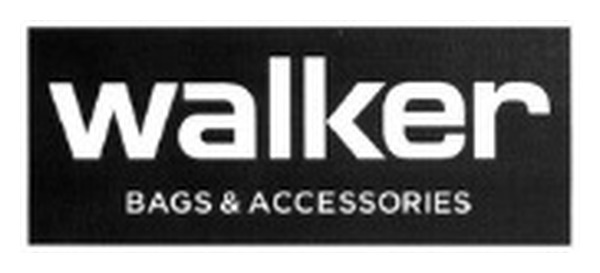
No. 256454
composite mark, classes 18 and 35

No. 256455
word mark, classes 18 and 35

No. 259980
word mark, classes 18, 25 and 35

No. 259981
composite mark, classes 18, 25 and 35
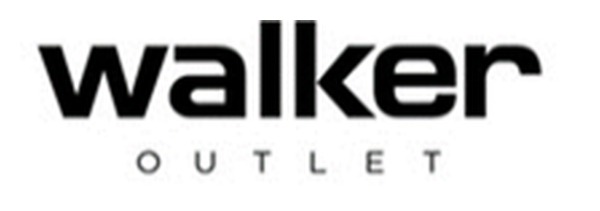
No. 311765
word mark, class 35
Images of the signs as reproduced in the Appeal Chamber's decision
How the application got through examination
The opponent filed a reasoned opposition during examination, on 7 September 2021. That is what gave it standing to appeal the registration to the Appeal Chamber: under the second paragraph of article 15(1) of the Law of Ukraine on Protection of Rights to Marks for Goods and Services (the Law), only a person who opposed during examination may do so.
The more interesting part came from the examiner. Examination found another similar mark on its own — the word mark WALKIE of the German company FALKE under international registration No. 629328 — and on 4 April 2023 notified a possible refusal for clothing and headgear in class 25.
The applicant replied within nine days by limiting class 25 to a single word — «footwear». That was enough. On 27 April 2023 a decision to register was issued for the remaining list.
The examiner held WALKER's arguments not to be taken into account: the signs were not similar, the applied-for sign had an original graphic presentation, and the word walky does not appear in dictionaries and is invented. The examiner also took into account the applicant's explanations about use of the sign in Poland.
What WALKER argued
Similarity. The shared beginning walk-, the same number of syllables, similar rhythm and stress; both words evoke walking and could be perceived as a series from one owner.
Reputation. The history of the brand from March 2010, when the previous owner opened the first store in Odesa. According to the opponent, at the time of its additional submissions the chain had 23 stores in nine cities, the brand was also used in Kazakhstan, its Instagram page had been run since April 2014 with more than 44,000 followers, and there were advertising campaigns and collaborations with designers and bloggers.
Misleading the public. Consumers would assume that «w walky» footwear is made under licence, under the control of or with the participation of WALKER. To the objection that WALKER itself manufactures nothing, the opponent replied that it has goods contract-manufactured under its own marks.
The applicant's reply
The main counter-argument: the opponent produced no evidence of marking goods in class 18 or 25 with the word WALKER. The materials showed only a chain of stores selling other people's brands, and the opponent's main registered activity was leasing of real estate.
The applicant also stressed that walky is an invented word while walker has the dictionary meaning «pedestrian», that the signs differ graphically (the letter W in a white circle, crimson colour), and that marks containing walk and its derivatives have long coexisted in Ukraine in the same classes.
How the Board compared the signs
Phonetically. The sounds [w, a, l, k] are shared, but the endings differ: [ˈwɔːki] against [ˈwɔːkə(r)]. That was enough for the Board not to find the signs confusingly similar on the phonetic limb.
Visually. Only the Latin alphabet is shared. Presentation, colours and composition differ, there is an independent figurative element — the letter W in a white circle — and some of the cited marks also contain the additional words BAGS&ACCESSORIES, MULTIBRAND SHOES&BAG STORE and outlet.
Conceptually — the most interesting part. The Board turned to the Cambridge and Oxford dictionaries: a walker is a person who walks, especially for exercise or enjoyment. The word walky is not in the dictionaries.
The Board accepted that a consumer with basic English may link walky to the verb to walk. But it concluded that, as a whole, walky is perceived as a fanciful sign, while walker conveys a specific idea. It separately noted that the word walker is often used as part of various class 25 marks.
Conclusion: the signs are not similar to the point of confusion. Therefore, as in the Winter fresh case, the Board did not examine the relatedness of the goods — without similarity of the signs that question does not arise.
The key point: a store name is not yet a brand on goods
The opponent also relied on the sixth paragraph of article 6(2) of the Law — signs that may mislead as to the person who manufactures the goods. Here the Board reached a conclusion that anyone retailing other people's brands under their own store name should know.
The Board examined the opponent's website and materials and established that the WALKER name is used for a chain of stores selling goods of other manufacturers — Tommy Hilfiger, Calvin Klein, Diesel, GANT, Guess, Michael Kors and others. The file, however, contained no evidence that the word walker was used to mark goods in classes 18 and 25.
The Board agreed that the walker marks had long been used for class 35 services. But it held that the reputation of the opponent's marks is not, in itself, a sufficient basis for concluding that consumers may be misled as to the manufacturer of the goods.
In its findings of fact the Board also noted that it had not established any sales in Ukraine of goods bearing «w walky». It based the conclusion that misleading the public was not proven on two circumstances: the signs are dissimilar, and the applied-for sign contains no indication of the manufacturer or of the opponent's commercial designations.
What the Board left unaddressed
The reasoning part of the decision does not answer several of the opponent's arguments that appear only in the summary of the parties' positions.
The Polish proceedings. The parties had met before in Poland: on 29 June 2016 WALKER filed international application No. 1332177 designating Poland, the applicant as owner of the Polish registration of «w walky» opposed it, and the Polish office, after re-examination, found the signs dissimilar. The opponent argued that in that case the applicant itself had argued that walky and walker were similar because of the shared root walk, so it now took the opposite position — and that the translation of the Polish decision was only partial. The Board does not assess these arguments in its reasoning.
European practice. The opponent's references to the EU–Ukraine Association Agreement, CJEU case law and EUIPO guidelines on assessing similarity were not considered in the decision either.
For anyone preparing a similar case this is a useful signal: the Board may not analyse arguments about a party's position in foreign proceedings, so the main weight should go on arguments under Ukrainian law and on evidence of use in Ukraine.
Outcome
- the opposition was rejected;
- the decision of 27 April 2023 to register «w walky» (composite) stands;
- the approved decision of the Appeal Chamber may be challenged in court within two months of its receipt.
Practical points
A store name and a product brand are different things. The fame of a shop sign does not in itself protect against someone else's brand on footwear or clothing. If a retail chain plans its own product line, the mark should be registered and used for the goods themselves, not only for retail services.
An invented word is stronger than a dictionary word. walker is an ordinary word that appears in many class 25 marks. walky resembles it, but its very absence from dictionaries became an argument in the applicant's favour.
Narrowing the specification is a working tool. The applicant did not argue with the examiner about WALKIE; it simply removed clothing and headgear. The application went through.
Standing to appeal has to be secured in advance — by a reasoned opposition during examination. Time limits and procedure are covered in our note on trademark oppositions in Ukraine.
If you are filing or opposing in Ukraine
A foreign applicant defended its registration here without disputing every point — by narrowing class 25 at the right moment. We file and prosecute Ukrainian applications, handle oppositions during examination and appeals before the Appeal Chamber, and report on deadlines in English. More on how we work with IP firms.
Send us the sign and the classes — we will tell you what the Ukrainian register shows and where the risks sit. Or write to office@rivnepatent.ua.
Questions we are asked about this case
Does a well-known store name protect against someone else's brand on goods in Ukraine?
Not automatically. In this case the Board accepted that the WALKER marks had long been used for class 35 services — a chain of multibrand stores — but held that the reputation of those marks is not in itself a sufficient basis for finding that consumers may be misled as to the manufacturer of the goods.
Why did the Board find walky and walker dissimilar?
Phonetically because of the different endings [ˈwɔːki] and [ˈwɔːkə(r)]. Visually because of the different presentation, colours, composition and the letter W in a white circle. Conceptually because walker is an English word meaning a person who walks, while walky is absent from dictionaries and is perceived as a fanciful sign, even if it may be associated with the verb to walk.
Did the Board examine whether the goods were related?
No. Since the signs were found dissimilar, the Board noted that there was no basis for examining the relatedness of the goods and services.
What helped the application get through examination?
Narrowing the specification. The examiner first notified a possible refusal for clothing and headgear in class 25 because of similarity with the word mark WALKIE owned by FALKE. The applicant limited class 25 to footwear, and the application was registered.
Who may appeal a third party's registration to the Appeal Chamber in Ukraine?
Under the second paragraph of article 15(1) of the Law of Ukraine on Protection of Rights to Marks for Goods and Services, a person who filed an opposition during examination under article 10(8) of that Law, within two months of receiving a copy of the decision. In this case the opponent had filed a reasoned opposition on 7 September 2021.
Source: decision of the Appeal Chamber of UANIPIO of 8 June 2026 on the opposition of FASHION RENT LLC against the decision to register the trademark «w walky» (composite), application No. m202113242, approved by Order No. 252/2026 of 8 September 2026. Full text of the decision (in Ukrainian). The provisions cited are articles 6(2), 6(3) and 15(1) of the Law of Ukraine on Protection of Rights to Marks for Goods and Services, as in force on 21 September 2026.
Decisions of the Appeal Chamber are public documents, published among other things so that the practice can be studied. This note analyses the reasoning of the decision — the arguments raised and how the Board assessed them — not the procedural history of the case. It contains no assessment of the conduct of the parties or their representatives. Rivnepatent did not represent either party. This material is for information only and is not legal advice.
 Author: Volodymyr Tarasiuk, Ukrainian patent and trademark attorney, Reg. No. 529
See also: Free Ukrainian trademark search · Trademark oppositions in Ukraine