A case from our practice
The name of Yarych Confectionery Factory's crackers, THE CRACKERS, translates simply as «crackers». The examiner said exactly that: the sign is descriptive, lacks distinctive character and is also similar to three earlier marks. We showed that buyers see THE CRACKERS as the factory's brand, and the trademark was registered for crackers.
The case in brief
- Sign — THE CRACKERS in a stylised font; application No. m202407475 of 11 April 2024;
- Applicant — Yarych Confectionery Factory LLC, the maker of THE CRACKERS crackers;
- Specification — the whole of class 30, 313 items;
- Outcome — certificate No. 383914 of 22 April 2026 for crackers.
The registered trademark
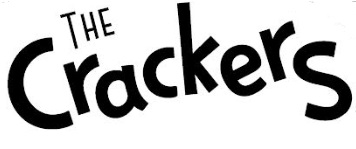
THE CRACKERS
application No. m202407475, certificate No. 383914
Image from the UANIPIO register
The objection: a descriptive name and three earlier marks
On 24 October 2025 a preliminary conclusion found that the sign did not meet the conditions for protection for any of the goods. There were three groups of grounds:
- for crackers, the sign lacks distinctive character and is descriptive because it indicates the kind of goods: «Crackers (translated from English) — crackers» (article 6(2), second and fourth paragraphs, of the Law of Ukraine on Protection of Rights to Marks for Goods and Services, the Law);
- for the other class 30 goods, which are not crackers, the sign may mislead (article 6(2), fifth paragraph, of the Law);
- for part of the goods, the sign is confusingly similar to three earlier registered marks (article 6(3) of the Law).
The earlier marks:
- the word mark «CRACKER» of Sandora LLC, certificate No. 98117, cited for coffee, tea, cocoa, sugar, spices, sauces and similar goods;
- the word mark «Crackets» of Intersnack Group GmbH & Co. KG, international registration No. 1190040, cited for bakery goods and confectionery, flour, cereal preparations and other goods;
- the composite mark «Delicious Quackers ORIGINAL CRACKERS Classic» of NN-Tel d.o.o., international registration No. 1456279, cited for biscuits and confectionery; its specification names crackers expressly.
Descriptiveness was the hardest objection. Among examples of descriptive signs the Rules approved by Order of the Ministry of Economy of Ukraine No. 19889 of 6 August 2024 (the Rules) list first «a simple name or kind of goods or services» (point 5 of chapter 2 of section II). English is no shield here: the examiner simply translated the word.
The Law offers a way out. Descriptive signs and signs lacking distinctive character may be protected «if they have acquired distinctive character as a result of their use before the filing date» (last paragraph of article 6(2) of the Law).
Our response
The reasoned response was filed on 24 December 2025 with 13 annexes. Its core was evidence that buyers see THE CRACKERS as the brand of a particular manufacturer, matching the factors the Rules name as signs of acquired distinctiveness (point 8 of chapter 2 of section II).
Long and broad use. The sign has been used in the same form as filed for about seven years. THE CRACKERS crackers are sold by Silpo, Varus, Auchan, Kopiyka, Epicentr, Maudau, Rozetka and other retailers — the response listed 15 such sources. The products are exported to Poland and Israel. Sales volumes for 2018–2025 were confirmed by a statement from the applicant and an export catalogue.
Buyers know the brand. The product features on the factory's social media: Instagram, Facebook, YouTube and TikTok, where at the time of the response the factory had 16 thousand followers and 223.6 thousand likes. A Google search for «The Crackers» returned offers of the applicant, and no offers of the owners of the cited marks.
Promotion. According to the applicant, the factory has taken part in international trade fairs since 2010: ISM and ANUGA in Cologne, PLMA in Amsterdam, SIAL in Toronto, Yummex Middle East in Dubai and FHC China.
A brand name, not a product name. THE CRACKERS is an English phrase with the definite article, not the word Ukrainian buyers use for the product («крекери»). The sign is written in a stylised font, and together these elements form a single brand image.
The earlier marks are different. «CRACKER» is singular, has no article, is a plain word mark and was cited for coffee, tea, spices and similar goods, not for crackers. «Crackets» is an invented word with no meaning and a different structure and sound. In «Delicious Quackers ORIGINAL CRACKERS Classic» the key element is the invented word Quackers, while CRACKERS merely names the product and Classic indicates the variety.
Outcome
- on 25 March 2026 the office decided to register the mark for crackers; the objections on distinctiveness, descriptiveness and similarity to the three earlier marks no longer appear in the decision;
- for the other class 30 goods the office kept the misleading ground: the sign points to crackers and those goods are not crackers (article 6(2), fifth paragraph, of the Law);
- on 22 April 2026 the trademark was registered under certificate No. 383914; it runs until 11 April 2034 and can be renewed.
Three months passed between the response and the decision. The decision does not say which arguments persuaded the examiner.
Our view: why it worked
The decision gives no direct answer, so what follows is our assessment.
Evidence of use decided the case. An article and a font do not make «crackers» any less descriptive for crackers. Only acquired distinctiveness overcomes descriptiveness, and that is what most of the response proved: years of sales through national chains, exports, social media, trade fairs. Crucially, the evidence showed the sign in the same form as applied for. Compare the «Smetana do borshchu» case: there a composite sign was used on the packaging while a word sign was applied for, and the Appeal Chamber rejected the evidence.
A shared descriptive word does not make marks similar. The «CRACKER» objection fell away together with the other goods: it was cited only for coffee, tea, spices and the like, and crackers are not among them. «Crackets» and «Delicious Quackers ORIGINAL CRACKERS Classic», however, were cited for biscuits and confectionery. The Rules require similarity to be assessed «on the basis of the elements that have distinctive character», with the signs compared as a whole (point 16 of chapter 8 of section VI). For crackers the word «crackers» carries no distinctive weight: in «Delicious Quackers ORIGINAL CRACKERS Classic» the key element is Quackers, and «Crackets» is built differently. The Appeal Chamber applied similar logic in the «Winter fresh» case.
Misleading is a separate ground. For coffee or sauces the name THE CRACKERS really may mislead: the Rules treat as misleading a sign that «directly or through associations indicates a kind of goods and/or their characteristics that do not in fact correspond to reality» (point 10 of chapter 2 of section II). Acquired distinctiveness is no defence against that ground. For the brand it is no loss: what is sold under it is crackers. In the case of the THE CRACKERS cracker shape the list was narrowed in the response itself, to products that can actually take that shape.
The name and the shape are two separate trademarks for one product, and both are now registered. In parallel we handled another case for the same factory, «МАТУСИНЕ», which concerned similarity to an earlier mark.
Practical points
A descriptive name is not a dead end if it has a market history. Sales by year, retail chains, exports, social media, trade fairs: collect anything that shows how long and where buyers have seen your name. Evidence must date from before the filing date. How to respond to a provisional refusal in Ukraine.
Register the name in the form you sell it. Then every pack on the shelf is evidence of use of exactly the sign applied for. Word, composite or figurative: what to file in Ukraine.
A shared word describing the product is not similarity. Look at what actually distinguishes the earlier mark from others. The «Rodent Off» v OFF! case.
Claim goods the name does not distort. «Crackers» on a pack of coffee misleads, and no evidence of use will change that.
Questions and answers
Can a trademark that simply names the product be registered in Ukraine?
As a rule, no: article 6(2), fourth paragraph, of the Law of Ukraine on Protection of Rights to Marks for Goods and Services bars signs that consist only of descriptive indications, including those indicating the kind of goods. The last paragraph of the same point provides the exception: such a sign may be protected if it has acquired distinctive character through use before the filing date.
Does a name in a foreign language help?
Not by itself: the office assesses the meaning of the word, including in translation. Here the conclusion opened with «Crackers (translated from English) — crackers». The article or a stylised font may support the arguments, but for a product name the decisive factor, in our view, is evidence of use.
What evidence proves acquired distinctiveness?
Point 8 of chapter 2 of section II of the Rules approved by Order of the Ministry of Economy of Ukraine No. 19889 of 6 August 2024 names three groups of factors: consumers' awareness of the link between the sign and the goods or the applicant; the duration, scale and geography of use, including online; and the duration, scale and geography of promotion, such as advertising and trade fairs. In this case: sales through national retail chains and online shops, exports, a sales statement, social media pages and international trade fairs.
Why was the mark registered only for crackers?
For other class 30 goods the sign indicates a kind of goods they are not, so it may mislead (article 6(2), fifth paragraph, of the Law of Ukraine on Protection of Rights to Marks for Goods and Services). Acquired distinctiveness does not cure this: the exception in the last paragraph of article 6(2) does not cover that ground.
How long did examination take after the response?
Three months passed from the reasoned response to the decision to register, and another month to registration.
If your client faces a refusal in Ukraine
We prepare responses to preliminary conclusions and Madrid provisional refusals, narrow specifications where it helps, gather evidence of use and acquired distinctiveness, and run clearance searches against the Ukrainian register. More on how we work with IP firms.
Send us the office action — we will tell you how strong the objection is. Or write to info@patent.rv.ua.
Source: file of Ukrainian application No. m202407475. Certificate No. 383914 in the UANIPIO register. The provisions cited are those of the Law of Ukraine on Protection of Rights to Marks for Goods and Services in the version of 26 February 2026 and of the Rules in the version of 18 September 2024. Quotations from office documents are our translation.
Rivnepatent represented the applicant in this matter; the applicant's representative was Yurii Trachuk, Ukrainian patent and trademark attorney. Published with the consent of Yarych Confectionery Factory LLC. This material is for information only and is not legal advice.
Author: Volodymyr Tarasiuk, Ukrainian patent and trademark attorney, Reg. No. 529
See also: THE CRACKERS: a cracker shape registered as a trademark · MATUSYNE v Mamulyn: similar idea, different marks · Why evidence of use did not save a descriptive mark