A case from our practice
Yarych Confectionery Factory applied to register not a name but the shape of its THE CRACKERS cracker: a four-sided piece with rounded corners and a round hole in the centre. Ukraine's office replied that this is an ordinary biscuit shape without distinctive character. We showed that buyers recognise this shape as a sign of this particular producer — and the three-dimensional trademark was registered.
The case in brief
- Sign: three-dimensional: the shape of a cracker, without words; Ukrainian application No. m202412789 of 28 June 2024;
- Applicant: Yarych Confectionery Factory LLC, producer of THE CRACKERS crackers;
- Specification: initially the whole of Nice class 30, 313 items; after narrowing, 18 items of flour products and confectionery;
- Outcome: certificate No. 389472 of 15 July 2026.
The registered three-dimensional mark
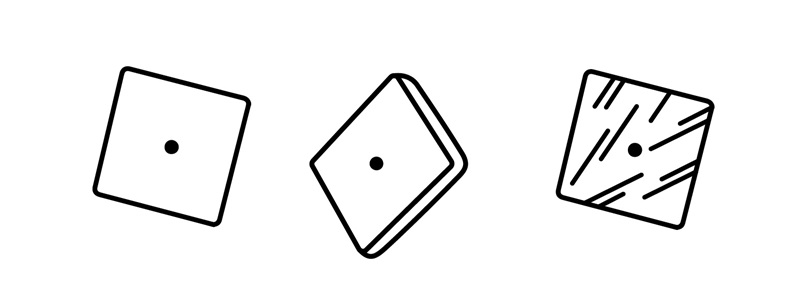
Cracker shape
application No. m202412789, certificate No. 389472
Image from the UANIPIO register
How a shape is filed
A three-dimensional trademark is filed as a set of images: one two-dimensional image to show the mark as a whole and several views. This is required by point 11 of chapter 3 of section III of the Rules approved by Order of the Ministry of Economy of Ukraine No. 19889 of 6 August 2024 (the Rules). The application contains such a set: a perspective view, a top view and a bottom view.
The objection: an ordinary biscuit shape
On 20 March 2026 a preliminary conclusion found that the sign did not meet the conditions for protection for any of the goods. There were two groups of grounds:
- for goods that are not flour products or confectionery or cannot take this shape (coffee, spices, sauces and so on), the sign may mislead (article 6(2), fifth paragraph, of the Law of Ukraine on Protection of Rights to Marks for Goods and Services, the Law);
- for flour products and confectionery, the sign lacks distinctive character and has not acquired it through use (second paragraph) and is a customary shape of goods of this kind in bona fide and established trade practice (third paragraph).
The examiner's logic is clear. Among signs lacking distinctive character the Rules expressly name a realistic or schematic image of the goods applied for those same goods (point 3 of chapter 2 of section II). The shape of the product is the closest case: buyers usually see a biscuit in it, not a brand.
But the Law leaves a way out. Signs lacking distinctive character and customary signs may be protected «if they have acquired distinctive character as a result of their use before the filing date» (last paragraph of article 6(2) of the Law). This exception does not cover the risk of misleading: that is removed by narrowing the list.
Our response
The reasoned response was filed on 18 May 2026 with 16 annexes. We grouped the evidence by the factors the Rules name as signs of acquired distinctiveness (point 8 of chapter 2 of section II).
Buyers know the shape. The cracker has dedicated pages: on Facebook since 2015 and on Instagram since 2019; at the time of the response the factory's TikTok had 18.6 thousand followers and over 310 thousand likes. The posts focus on the shape of the product. The packaging was designed by the branding studio gram.family, which made the cracker shape part of the product's visual identity.
Long and broad use. The shape has been used in the same form as filed for more than eight years. The crackers are sold throughout Ukraine: Silpo, Auchan, Varus, Kopiyka, ATB, Maudau, Rozetka and others — the response listed 17 product pages. The products are exported to Poland and Israel. Sales volumes for 2018–2025 were confirmed by a statement from the applicant.
Promotion. According to the applicant, the factory has taken part in international trade fairs since 2010: ISM and ANUGA in Cologne, PLMA in Amsterdam, SIAL in Toronto, Yummex Middle East in Dubai and FHC China.
The shape is not ordinary. The sign is not a simple geometric figure but a combination of features: a four-sided piece with rounded corners and a central round hole. Such a shape is not mandatory, technically determined or typical of all crackers.
To address the risk of misleading, the list was narrowed to 18 items: peanut confectionery; flour-based dough products; confectionery; cereal-based snacks; rice-based snacks; cereal preparations; crackers; rice crackers; almond confectionery; cookies; biscuits (galette type); sandwich cookies; galette sandwich cookies; gingerbread; sweets; dry biscuits; pastry dough; bakery goods.
Outcome
- on 2 June 2026 the office concluded that the sign meets the conditions for protection for all 18 items of the narrowed list;
- on 15 July 2026 the three-dimensional trademark was registered under certificate No. 389472; it runs until 28 June 2034 and can be renewed.
Two weeks passed between the response and the conclusion. The conclusion does not say which arguments persuaded the examiner.
Our view: why it worked
The decision gives no direct answer, so what follows is our assessment.
The evidence concerned exactly the sign applied for. Here the shape is the product itself: every THE CRACKERS cracker sold has the shape that was filed. Compare the «Smetana do borshchu» case: there the evidence showed a composite sign on the packaging while a word sign was applied for, and the Appeal Chamber rejected it.
The history began before the filing date. Brand pages since 2015 and 2019 and sales since 2018 cover the years before June 2024, and that is the period the Law takes into account.
The grounds were separated. Acquired distinctiveness does not cure the risk of misleading, so for coffee or sauces we did not argue but narrowed the list to products that can actually take the shape of a cracker. After that, no objections remained.
Practical points
A product shape can be registered, but be ready to prove recognition. Without evidence the examiner will see the shape simply as the product.
Collect evidence dated before filing. Sales by year, advertising, social media, trade fairs: anything that shows how long and where buyers have seen the shape. Documents from after the filing date will not carry the case.
Register what is on the market. The evidence must show exactly the form applied for. Word, composite or figurative: what to file in Ukraine.
Claim goods that can take the shape. A cracker shape for coffee is misleading.
For a new shape, consider an industrial design. It does not require evidence of use but does require novelty. Trademark or industrial design in Ukraine.
Questions and answers
Can the shape of a product be registered as a trademark in Ukraine?
Yes, as a three-dimensional mark. But a shape that simply reproduces the appearance of the product usually lacks distinctive character: point 3 of chapter 2 of section II of the Rules approved by Order of the Ministry of Economy of Ukraine No. 19889 of 6 August 2024 gives as an example a realistic or schematic image of the goods applied for those same goods. Then evidence is needed that the shape acquired distinctive character through use before the filing date (article 6(2) of the Law of Ukraine on Protection of Rights to Marks for Goods and Services).
What evidence proves acquired distinctiveness?
Point 8 of chapter 2 of section II of the Rules approved by Order of the Ministry of Economy of Ukraine No. 19889 of 6 August 2024 names three groups of factors: public awareness of the link between the sign and the goods or the applicant; the duration, extent and geography of use, including online; and the duration, extent and geography of promotion, such as advertising and trade fairs. Here this meant dedicated brand pages on social media, sales through national retail chains, exports, a statement of sales volumes and participation in international trade fairs.
Does evidence from after the filing date count?
The Law requires distinctiveness to have been acquired before the filing date (last paragraph of article 6(2) of the Law of Ukraine on Protection of Rights to Marks for Goods and Services). So the core of the evidence should cover the period before filing.
How is a three-dimensional mark represented in a Ukrainian application?
By a set of images: one two-dimensional image showing the mark as a whole and several views giving the fullest idea of it (point 11 of chapter 3 of section III of the Rules approved by Order of the Ministry of Economy of Ukraine No. 19889 of 6 August 2024). In this case we filed a perspective view, a top view and a bottom view.
Trademark or industrial design for a product shape?
An industrial design protects a new design and requires novelty at the filing date. A three-dimensional trademark suits a shape that buyers already associate with your producer and can last indefinitely if renewed.
If your client faces a refusal in Ukraine
We prepare responses to preliminary conclusions and Madrid provisional refusals, narrow specifications where it helps, gather evidence of use and acquired distinctiveness, and run clearance searches against the Ukrainian register. More on how we work with IP firms.
Send us the office action — we will tell you how strong the objection is. Or write to info@patent.rv.ua.
Source: file of Ukrainian application No. m202412789. Certificate No. 389472 in the UANIPIO register. The provisions cited are those of the Law of Ukraine on Protection of Rights to Marks for Goods and Services in the version of 26 February 2026 and of the Rules in the version of 18 September 2024. Quotations from office documents are our translation.
Rivnepatent represented the applicant in this matter; the applicant's representative was Yurii Trachuk, Ukrainian patent and trademark attorney. Published with the consent of Yarych Confectionery Factory LLC. This material is for information only and is not legal advice.
Author: Volodymyr Tarasiuk, Ukrainian patent and trademark attorney, Reg. No. 529
See also: Why evidence of use did not save a descriptive mark