A registry review
Someone files for a famous name before its owner does and then opposes the owner's applications for years. Many markets know the pattern, and Tesla was no exception. On 20 October 2026 the EUIPO Board of Appeal confirmed that the EU trademark TESLA for vehicles had been filed in bad faith and upheld its invalidity in its entirety. Below: what the decision rests on, what the Ukrainian register shows and which tools Ukrainian law offers against a blocking filing.
What happened
EU trademark No. 005838727 TESLA was registered for goods in Class 12 — vehicles. According to IPKat and Dreyfus, it had been held by Capella EOOD since 2022, and in 2022 Tesla applied to the EUIPO for a declaration of invalidity on the ground of bad faith. In December 2024 the Cancellation Division granted the application.
The proprietor appealed. On 20 October 2026 the EUIPO Board of Appeal (case R 317/2025-4) confirmed the invalidity in full. The EUIPO published a summary in its recent case-law review, and World Trademark Review has covered the decision.
What the Board of Appeal found
The proprietor knew of the earlier rights. The Board held that the proprietor must have known of the earlier US TESLA rights and their use for electric vehicles. The launch of the Tesla Roadster electric sports car received extensive media coverage, including in Austria. Together with the proprietor's expertise in trademark law and extensive filing activity for Class 12 goods, this made coincidental adoption implausible.
The chronology shows a strategy. After securing an earlier Austrian filing date, the proprietor filed the contested EU trademark and opposed three subsequent EU trademark applications. Numerous restrictions of the specification prolonged the proceedings for more than 15 years, which the Board saw as an intention to maintain a blocking position.
No business and no logic. The proprietor showed neither genuine commercial activity nor a plausible commercial logic for the filing. The Board concluded that the mark was meant to obtain an economic advantage by blocking a third party rather than to compete fairly — an abuse of the trademark system.
The legal basis is Article 59(1)(b) of Regulation (EU) 2017/1001 on the European Union trade mark: an EU trademark is declared invalid where the applicant was acting in bad faith when filing. The Board's decision can still be appealed to the General Court; the sources we reviewed do not mention such an appeal.
What the Ukrainian register shows
Tesla, Inc. trademarks in Ukraine
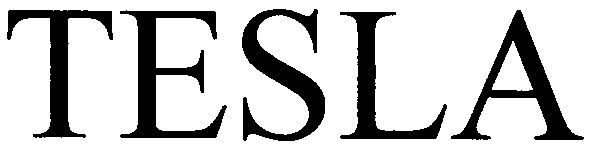
In force
TESLA, certificate No. 160682
filed 15.02.2011, valid until 15.02.2031
Classes 7, 9, 12, 37

In force
TESLA, certificate No. 285450
filed 15.12.2017, valid until 15.12.2027
Classes 35, 37, 42
Images from the Ukrainian State Register of Trademarks
As of 26 November 2026, Tesla, Inc. holds two Ukrainian certificates. Certificate No. 160682, filed on 15 February 2011, covers among other things electric cars and their parts in Class 12, batteries, and car maintenance and repair; it has been renewed until 15 February 2031. Certificate No. 285450, filed on 15 December 2017 with priority from US applications of 15 June 2017, was registered on 10 November 2020 for solar energy services.
On 6 November 2026 the company filed another application, TESLA MEGAPACK (No. m202622979), for battery energy storage systems and their installation and maintenance; it is at the formal examination stage.
A search for “tesla” and its Cyrillic spelling returns 70 applications and certificates of various owners, from clinics and bars to equipment makers. That in itself is normal: a trademark is protected for specific goods and services, and the same word may belong to different owners in different fields. We do not assess any of these filings.
What Ukrainian law provides
The Law of Ukraine on Protection of Rights to Marks for Goods and Services (the Law) has no separate bad-faith ground. Article 19(1) of the Law allows a court to invalidate a certificate in three cases: the mark does not meet the conditions for protection, the certificate contains elements that were not in the application, and the certificate was granted “as a result of filing an application in violation of the rights of others” (our translation). In practice, arguments that would be framed as bad faith in the EU have to fit into this last ground.
Other tools exist. Article 19(4) of the Law allows the owner of a mark in a foreign state to seek invalidation or a transfer of rights where its agent or representative registered the mark in Ukraine without authorisation. Article 25 of the Law allows a mark to be recognised as well known by the Appeals Chamber or a court, “regardless of its registration in Ukraine” (our translation). And if a registered mark is not used for five years, any person may ask a court for early termination of the certificate (article 18(4) of the Law).
The cheapest moment to act is before registration. Within three months from publication of the application, any person may file a reasoned objection (article 10(8) of the Law), including on the basis of similarity to marks protected without registration as well known (article 6(3) of the Law). We explain the procedure on the page about trademark oppositions in Ukraine. After registration only the courts remain, and where a court finds that the application was filed in violation of the rights of others, it may order the certificate holder to compensate the damage (article 19(5) of the Law).
Takeaways
- File in key markets before the launch. Media success is a signal not only for buyers but also for those who hunt for other people's names.
- A blocking mark can be removed, but it takes years. Four years passed between Tesla's application and the Board's decision, and the blocking position itself lasted longer.
- Collect evidence of reputation early. The Board relied on media coverage, including local media, the chronology of filings and the proprietor's conduct. In Ukraine the same evidence is needed for well-known mark recognition.
- Watch third-party applications. An objection within three months of publication is cheaper and faster than court proceedings after registration.
- Check before paying to “buy back” a name. The filing date, the specification, use and any link between the applicant and the client's business decide whether invalidity or revocation is available.
Check your name
See whether trademarks or applications with this name are already in the Ukrainian State Register — free, based on UANIPIO data.
Questions and answers
What is a bad-faith EU trademark filing?
A filing made not to mark one's own goods honestly but, for example, to block someone else's brand or to extract payment for it. Article 59(1)(b) of Regulation (EU) 2017/1001 on the European Union trade mark allows such a mark to be declared invalid. In the TESLA case the EUIPO Board of Appeal relied on the proprietor's knowledge of the earlier rights, the chronology of filings and oppositions, and the absence of any real business or commercial logic.
Does Ukrainian law have a bad-faith ground for invalidity?
Not as a separate ground. Article 19(1) of the Law of Ukraine on Protection of Rights to Marks for Goods and Services lets a court invalidate a certificate where the mark does not meet the conditions for protection, where the certificate contains elements that were not in the application, and where the certificate was granted on an application filed in violation of the rights of others. Article 19(4) of the Law of Ukraine on Protection of Rights to Marks for Goods and Services separately protects a foreign owner against registration by its agent or representative without authorisation.
Can a brand that is not registered in Ukraine be protected there?
Yes, if it is recognised as well known. Under article 25(1) of the Law of Ukraine on Protection of Rights to Marks for Goods and Services, recognition is granted by the Appeals Chamber or a court, and a mark "may be recognised as well known regardless of its registration in Ukraine" (our translation). The level of recognition has to be proven with evidence.
How long is the window to oppose a Ukrainian application?
Three months from the publication of the application details in the Bulletin, under article 10(8) of the Law of Ukraine on Protection of Rights to Marks for Goods and Services. The objection must be reasoned and a fee is payable. After registration, only court proceedings remain.
What can be done if a client's name is already registered in Ukraine by someone else?
First establish the facts: the filing date, the specification, whether the mark is used and what shows the applicant's knowledge of the client's brand. Then choose the route: an invalidity action under article 19(1) of the Law of Ukraine on Protection of Rights to Marks for Goods and Services, revocation for five years of non-use under article 18(4) of the same Law, recognition of a well-known mark, or negotiation.
If a client's name is already taken in Ukraine
We check the Ukrainian register for the name, establish when and by whom the conflicting application was filed, and assess what will work: an objection, an invalidity action, revocation for non-use or well-known mark recognition. For foreign rights holders entering Ukraine, we also advise on designating Ukraine under the Madrid System early enough.
Or write to office@rivnepatent.ua — we will look at the register and tell you what to do next.
Sources: EUIPO summary of decision R 317/2025-4 and the decision in eSearch Case Law; IPKat, 26 December 2024; Dreyfus, 6 January 2025; World Trademark Review, 29 October 2026; the Ukrainian State Register of Trademarks and UANIPIO open data on certificates Nos. 160682, 285450 and application No. m202622979 as of 26 November 2026; the Law of Ukraine on Protection of Rights to Marks for Goods and Services as in force on 26 February 2026; Regulation (EU) 2017/1001. Quotations from Ukrainian sources are our translation. This article describes information from public registers and is not an assessment of the parties' conduct.
Decisions of the EUIPO Boards of Appeal are public documents published, among other things, for the study of practice. Here we review the reasoning of the decision — which arguments were raised and how the Board assessed them — not the procedural history of the case. We make no assessment of the conduct of the parties or their representatives. Rivnepatent did not represent any of the parties. This article is for information only and is not legal advice.
 Author: Volodymyr Tarasiuk, Ukrainian patent and trademark attorney, Reg. No. 529
See also: CRICOVA: a brand registered to someone else in Ukraine · Trademark oppositions in Ukraine