A registry review
The Ukrainian band Schmalgauzen has existed since 2020 and plays to full houses, and on 2 October 2026 its leaders announced publicly that the trademarks bearing the band's name are not registered to them. We opened the Ukrainian trademark register to see what it actually records. The picture turned out to be more interesting than the news: a registered mark owned by one person, three recent applications filed by another, and objections against all three, filed one day before the deadline.
Updated 27 October 2026. On 7 October an application, an agreement on the transfer of ownership of the trademark (or an extract from it), a power of attorney and a payment order were filed in the file of certificate No. 377979 — the set that is filed to record a new owner in the register. As of 27 October the register still shows Dmytro Yakymov as the owner; who is acquiring the rights cannot be seen from public data. On 16 October letters with annexes were filed in all three of Andrii Shyrko's applications: the register does not show their content, but in timing they fall within the two-month term for the applicant's response to the objections.
What happened
The conflict was reported by the Ukrainian music outlet MUZVAR. According to it, the band's vocalists and songwriters Vlad Mykhalchuk and Mykhailo Matiukhin (the outlet calls them the leaders of the project) recorded a video announcing that they were ending their cooperation with producer Valentyn Bilokon and with director and artistic director Andrii Shyrko. The musicians say that afterwards they faced problems with access to social media, financial tools and other resources of the project.
As MUZVAR writes, a separate part of the video is devoted to trademarks: the artists show register extracts for the Latin-script name SCHMALGAUZEN, the Cyrillic «ШМАЛЬГАУЗЕН» and related signs, and stress that the rights were not registered to them.
In response, Andrii Shyrko called this end to the relationship «mean, ironic and low», said that the parties were communicating through lawyers and declared his readiness for the conflict to be examined by law enforcement. According to the outlet, his public response contains nothing specific about any arrangements on the trademarks.
We do not know what agreements existed within the team, and we do not assess who is right in this dispute. What follows is only what can be seen in the public data of UANIPIO, the Ukrainian IP office, as of 5 October 2026.
What the register records
Two signs — two different persons

Registered
«schmalgauzen», certificate No. 377979
filed 9 April 2024, registered 21 January 2026
classes 16, 25, 35, 41
Pending application
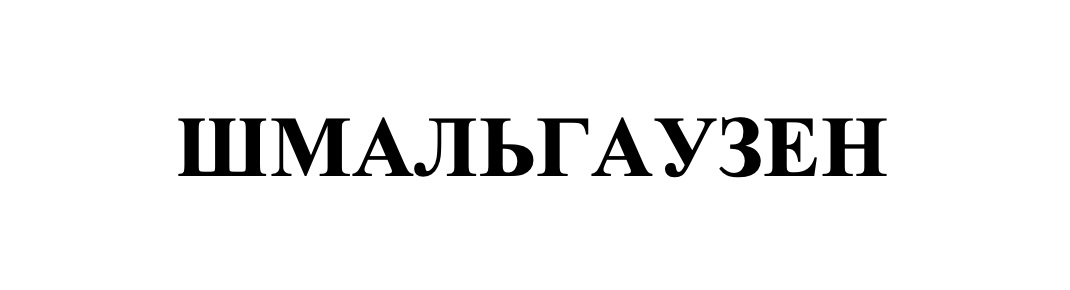
«шмальгаузен», application No. m202608714
filed 1 May 2026, formal examination
classes 16, 25, 35, 41
Images from the UANIPIO register
The Latin-script name. The trademark «schmalgauzen» was registered on 21 January 2026 on an application filed back on 9 April 2024. The applicant and owner of the certificate is an individual, Dmytro Olehovych Yakymov. The certificate is in force and expires on 9 April 2034.
MUZVAR noted that the same name appears in the credits of the band's video «Сад закоханих лілій» (Garden of Lilies in Love). We checked: the description of the video on the band's Instagram page names Dmytro Yakymov as first assistant director. The director of the same video is Andrii Shyrko. Whether this is the same person cannot be seen from the register: the credits give no patronymic.
The Cyrillic name. The application for «шмальгаузен» was filed on 1 May 2026 in the name of Andrii Shyrko, for the same four classes. Its details were published on 26 May, and it is now at the formal examination stage.
A search by word elements found no other applications or certificates containing «schmalgauzen» or «шмальгаузен». But a search by applicant rather than by name turns up two more applications by Andrii Shyrko, filed on 30 March 2026 through the same representative: «gauzen» (classes 25 and 41) and «gauzen chiosco» (class 25). «Gauzen chiosco» is the name of the band's merchandise: the @gauzenchiosco account on Instagram describes itself as «official merch buro» and «part of @schmalgauzen». Hence class 25, clothing. He had already filed applications for «gauzen» and «gauzen chiosco» on 12 June 2025 without a representative, but after a request for proof of payment of the fee both were deemed withdrawn.
We also searched by owner and applicant for Valentyn Bilokon, Vladyslav Mykhalchuk and Mykhailo Matiukhin: the search showed no trademarks or applications in their names.
The specification covers everything the band earns from
It is worth looking not only at the owner but also at what exactly is registered. Class 41 includes «arranging and conducting of concerts», «presentation of live performances», «theatre productions», «orchestra services», «songwriting» and «music composition services». Class 35 includes «business management of performing artists» and online sale of music. Class 25 covers clothing, that is, merchandise. Class 16 covers posters, tickets and printed matter.
In other words, the certificate covers the stage, the recordings and the merchandise. The owner of a valid certificate has the exclusive right to prohibit others from using the registered trademark without his consent (article 16(5) of the Law of Ukraine on Protection of Rights to Marks for Goods and Services, the Law). The name on a poster, on a T-shirt and on a streaming service is use for exactly these goods and services.
An application that was once deemed withdrawn
The file history of the first application contains a telling detail. On 21 February 2025 UANIPIO sent a notice requiring additional materials. The materials did not arrive, and on 29 April 2025 the office notified that the application was deemed withdrawn because «the necessary materials were not received within the set time limit».
On 2 June 2025 a letter and a power of attorney for a representative appear in the file, on 5 June the conclusion of formal examination, and on 26 November the decision to register. The application was returned to examination and kept its filing date of 9 April 2024.
Ordinary restoration does not explain this: under article 10(6) of the Law it requires a request and a fee, and there is no such fee among the payments on the application. The explanation lies elsewhere: martial law.
The request for materials and the notice of withdrawal arrived while the Law of Ukraine on Protection of the Interests of Persons in the Field of Intellectual Property during Martial Law Introduced in Connection with the Armed Aggression of the Russian Federation against Ukraine No. 2174-IX of 1 April 2022 was still in force. It suspended the running of time limits in procedures for acquiring rights, except time limits for actions of the office itself, and allowed documents to be filed without fees for restoring time limits. From 31 May 2025 that law lost force: it was repealed by a separate Law of Ukraine No. 4362-IX of 16 April 2025. Under it, suspended time limits resumed «taking into account the time that had elapsed before their suspension, but for not less than seventy-five days».
The letter and the power of attorney arrived on 2 June 2025, two days after the new rule took effect, that is, within this window. What exactly the letter contained cannot be seen from public data, but the dates fit this regime, and under it no restoration fee is needed. How restoration works when a time limit really is missed is explained in Missed a Deadline in Ukraine: Withdrawn Applications and Restoration.
Cyrillic against Latin: the second application runs into the first
The application for «шмальгаузен» was filed two years later than the one for «schmalgauzen», by a different person and for the same classes. The two signs sound the same. And article 6(3) of the Law of Ukraine on Protection of Rights to Marks for Goods and Services does not allow registration of signs that are identical with, or so similar as to be confused with, trademarks earlier registered in the name of another person for the same or related goods and services.
This obstacle can be overcome with the consent of the owner of the earlier registered trademark, provided consumers are not misled (article 6(6) of the Law). Whether there is such consent in this case cannot be seen from the register. But the construction itself is telling: the rights to the Latin and Cyrillic versions of one name are held by two different people, and neither of them is one of the musicians who made the statement.
Three objections one day before the deadline
The most recent events in the register took place well before the public video. On 25 August 2026, objections that the sign does not meet the conditions for protection were filed against all three of Andrii Shyrko's applications — «шмальгаузен», «gauzen» and «gauzen chiosco» — each with about twenty annexes. The fees for filing them, UAH 2,000 each, were paid on 23 August.
Such an objection, Ukraine's pre-registration opposition procedure, may be filed by any person within three months from the date the application details are published (article 10(8) of the Law). The details of all three applications were published on the same day, 26 May, so the term expired on 26 August. The objections arrived one day before.
Who filed them is not shown in public data, and we will not guess. All that can be seen is that on 3 September UANIPIO sent letters to the applicant and to a third party in all three applications, and on 7 September e-mails with annexes arrived in the files of «шмальгаузен» and «gauzen». Under article 10(8) of the Law, the applicant may inform the office of its position on the objection within two months from receipt of a copy: rebut it, amend the application or withdraw it.
Had that term been missed, the application would have had to be fought after registration, in court. How the procedure works on the applicant's side is explained in Trademark Oppositions in Ukraine: Deadlines and Procedure.
And what about the certificate already granted?
An objection against the valid certificate can no longer be filed with UANIPIO: the term for it expired back in 2024, three months after the application was published. What remains is the court. Article 19(1) of the Law names three grounds for declaring a certificate invalid: the trademark does not meet the conditions for protection, the certificate contains elements that were not in the application, and the certificate was issued on an application filed in violation of the rights of others.
If the court declares the certificate invalid and finds that the application was filed in violation of the rights of others, it may order the certificate owner to compensate the damage caused (article 19(5) of the Law).
Whether such grounds exist here depends on what the public cannot see: who came up with the name and when, what the agreements between the members and the management say, and whether there was consent to registration and in whose name. The musicians say the evidence is on their side; according to MUZVAR as of 3 October, the other side's public response contains nothing specific. The register gives no answer to this question.
Takeaways
- Being the face of a project does not mean owning its name. The register shows the applicant and the owner, not whoever stands on stage. The right to the certificate belongs to the applicant with the earlier filing date.
- «In whose name do we file?» is decided before filing. A joint company, several co-owners or one person bound by an agreement — each option has its own consequences, and the choice depends on how the team is organised.
- Latin and Cyrillic are two signs. If different people file them, the later application may run into the earlier trademark, and then the owner's consent becomes necessary.
- Other people's applications need watching. There are three months from publication to file an objection. Here the objections came one day before the deadline, while the file history of the first application shows no objections at all.
- The list of goods and services matters as much as the name. The four classes in this case cover concerts, recordings, artist management and merchandise.
Questions and answers
Does being in a band mean a musician owns its name?
No. Trademark rights are conferred by the certificate and belong to its owner (article 16(2) of the Law of Ukraine on Protection of Rights to Marks for Goods and Services). The right to obtain the certificate belongs to the applicant whose application has the earlier filing date (article 5(6) of the Law of Ukraine on Protection of Rights to Marks for Goods and Services). Who came up with the name and who has performed under it for years is not taken into account by the register.
Who owns the trademark «schmalgauzen» in Ukraine?
According to the State Register, certificate No. 377979 (application No. m202407190 of 9 April 2024, registered on 21 January 2026, Nice classes 16, 25, 35 and 41) was issued to an individual, Dmytro Olehovych Yakymov. The band's vocalists Vlad Mykhalchuk and Mykhailo Matiukhin, who made a public statement on 2 October 2026, are not owners of this certificate. On 7 October 2026 an agreement on the transfer of ownership of the trademark was filed in the case; as of 27 October the owner in the register had not changed.
Has an application been filed for the Cyrillic name «шмальгаузен»?
Yes. Application No. m202608714 was filed on 1 May 2026 in the name of Andrii Shyrko for the same classes 16, 25, 35 and 41. As of 27 October 2026 it is at the formal examination stage. The same applicant has two more applications of 30 March 2026, «gauzen» and «gauzen chiosco». On 25 August 2026 third-party objections were filed against all three.
Who can file an objection against someone else's application in Ukraine, and by when?
Any person, within three months from the date the application details are published in the Official Bulletin (article 10(8) of the Law of Ukraine on Protection of Rights to Marks for Goods and Services). The objection must be reasoned, and a fee is paid for filing it. The applicant may respond within two months from receipt of a copy of the objection.
Can a Ukrainian trademark certificate already granted be cancelled?
Only through the courts. Article 19(1) of the Law of Ukraine on Protection of Rights to Marks for Goods and Services lists three grounds: the registered mark does not meet the conditions for protection; the certificate contains elements that were not in the application; or the certificate was issued on an application filed in violation of the rights of others.
If a brand in Ukraine has more than one owner
A band, a studio, an agency, a venue run by two partners — the situation is the same: while all is well, nobody thinks about the trademark, and when relations sour it turns out that the certificate belongs to one person or even to an outsider. We check what is already in the Ukrainian register under a name, advise in whose name and in which classes to file so that no partner is left without rights, and, if someone else's application has already been filed, assess whether there are grounds for an objection and whether the term is running out. More on how we work with IP firms.
Or write to info@patent.rv.ua — we will look at the register and tell you what to do next.
Sources: the State Register of Trademarks and UANIPIO public data on certificate No. 377979 and applications Nos. m202608714, m202606054 and m202606055 as of 27 October 2026; the description of the video «Сад закоханих лілій» and the @gauzenchiosco profile on Instagram; the band's interview with Suspilne and the MUZVAR publication of 3 October 2026 (both in Ukrainian). The provisions cited are those of the Law of Ukraine on Protection of Rights to Marks for Goods and Services in the version of 26 February 2026. Quotations from office documents, laws, the register and publications are our translation. This material describes data from public registers and is not an assessment of the conduct of the parties to the dispute.
Author: Volodymyr Tarasiuk, Ukrainian patent and trademark attorney, Reg. No. 529
See also: CRICOVA: a brand registered to someone else in Ukraine · Assignments and licences in Ukraine: the register entry decides