A case from our practice
A bicycle shop in Rivne has traded as Roverok since 2017. We filed an application for its composite sign in class 35. The owner of the registered trademark «ROWER OK», who also sells bicycles, first opposed the application before the examiner and, after it was accepted for registration, took the matter to the Appeals Chamber of UANIPIO. The panel dismissed the objection in full: the decision to register «Roverok» stands.
The case in brief
- Sign: composite «Roverok» (Ukrainian application No. m202401923 of 31 January 2024): a stylised bicycle in a circle above the word, on a black background;
- Applicant: an individual entrepreneur who runs a bicycle shop in Rivne;
- Services: class 35, including retail and wholesale of vehicles and apparatus for locomotion by land, advertising and marketing;
- Earlier mark: composite «ROWER OK», certificate No. 314828, registered for goods in class 12 and services in classes 35 and 39;
- Grounds: likelihood of confusion and misleading consumers as to the service provider;
- Outcome: decision of the Appeals Chamber of 2 September 2026 (in Ukrainian), approved by UANIPIO Order No. 343/2026 of 30 October 2026: objection dismissed in full.
The applied-for sign and the earlier mark
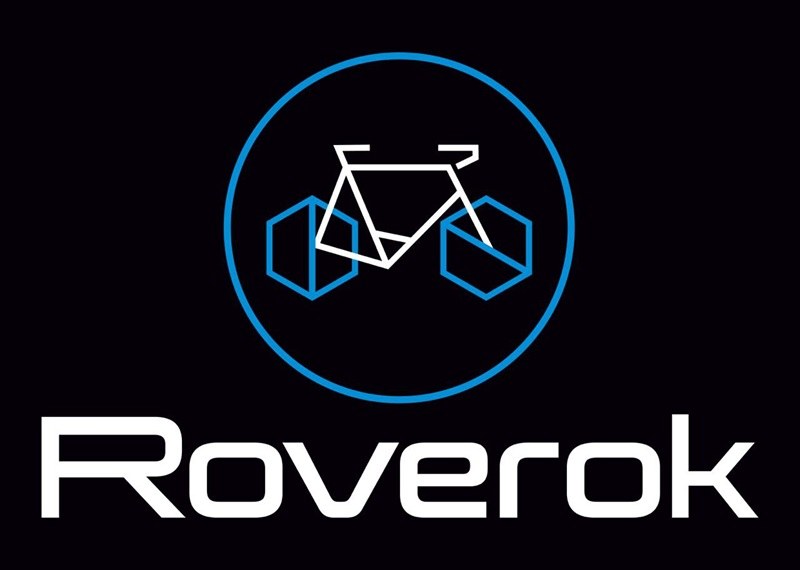
«Roverok»
application No. m202401923 of 31 January 2024; class 35; white, light blue, black
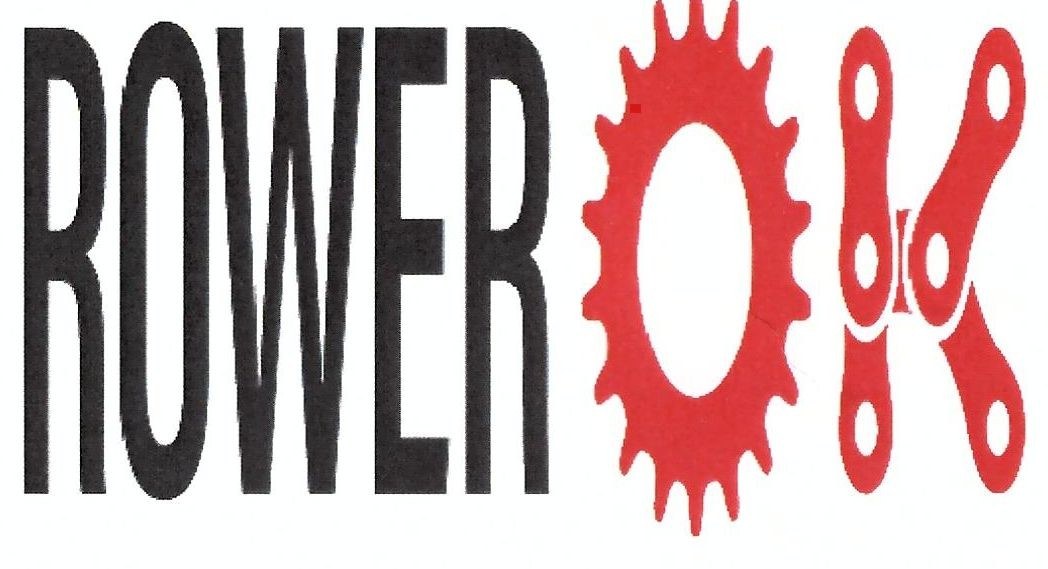
earlier mark «ROWER OK»
certificate No. 314828 of 23 February 2022 (filed 11 July 2019); classes 12, 35, 39; red, black, white
Images from the UANIPIO register
Timeline
- 31 January 2024 — application filed;
- 23 October 2024 — the owner of «ROWER OK» files a third-party opposition;
- 5 August 2025 — our response to the opposition with evidence of use and a request to limit the specification;
- 31 October 2025 — UANIPIO decides to register the mark for all services; the opposition is not upheld;
- 20 January 2026 — the opponent appeals to the Appeals Chamber;
- 2 September 2026 — hearing and decision; 30 October 2026 — decision approved by UANIPIO order.
The appellant's arguments
The appellant relied on article 6(3), second paragraph, and article 6(2), sixth paragraph, of the Law of Ukraine on Protection of Rights to Marks for Goods and Services (the Law):
- Sound: «Roverok» and «ROWER OK» are pronounced the same way — «roverok» — and the V/W difference does not matter;
- Appearance: both word elements are in Latin script; fonts, colours and devices are, in the appellant's view, minor differences;
- Meaning: both signs read as a diminutive of «rover», a regional Ukrainian word for a bicycle;
- Services: the class 35 services are related, and the limitation of the specification did not remove that;
- Misleading: «ROWER OK» has long been used for an online shop and on social media, so consumers might think «Roverok» belongs to the same owner or extends a series of its marks;
- Unfair competition: the filing itself was alleged to be an act of unfair competition.
Our position
Different word structure. «Roverok» is a single three-syllable word. In the earlier mark, «ROWER» and «OK» are separated and read apart — «rower-ok» or even «rower-okay».
Different meaning. We argued that «Roverok» is an invented word, while «ROWER OK» contains the English «rower» (a person who rows) and «OK».
Different overall impression. The signs differ in composition, devices and colours.
Actual use. In the response to the opposition we showed that the name Roverok was chosen for the Rivne bicycle shop back in 2017: a domain name, a website, two shops in the city, social media pages, a YouTube channel, press mentions and customer reviews.
What the panel decided
The panel compared the signs under points 15 and 16 of chapter 2 of section II and points 16 and 17 of chapter 8 of section VI of the Rules approved by Order of the Ministry of Economy of Ukraine No. 19889 of 6 August 2024 (the Rules): as a whole, from the standpoint of the average consumer, by sound, appearance and meaning.
- Sound: the panel accepted some phonetic similarity due to shared sounds. But «Roverok» is perceived as one word [ro-ve-rok], whereas «ROWER» and «OK» are visually separated and pronounced apart, so there are certain phonetic differences;
- Appearance: «Roverok» is white lettering on a dark background with a bicycle in a light-blue circle. In «ROWER OK» the second part is red, the «O» is a sprocket and the «K» is built from chain links. Both signs are highly stylised and create a different overall visual impression;
- Meaning: relying on an academic dictionary of Ukrainian, the panel noted that «rover» is a dialect word for a bicycle used in western Ukraine. Next to a bicycle device, «Roverok» may be perceived as an affectionate name for a bicycle, while «ROWER OK» reads as two words — «bike — okay». The bicycle theme is shared, but the meanings differ.
The key point. In the panel's view the word elements «Roverok» and «ROWER OK» «do not acquire a dominant role» in the overall perception (our translation), because they are associated with the field of business and therefore do not attract the consumer's main attention as a means of identification. The emphasis shifts to the graphic execution — and there the signs differ.
Because the signs were not found confusingly similar, the panel did not examine whether the services are related: the relative ground under article 6(3), second paragraph, of the Law of Ukraine on Protection of Rights to Marks for Goods and Services does not apply.
Misleading as to the provider. The panel recalled that a sign misleads as to the provider if it contains elements pointing to a particular person. «Roverok» contains no such elements and is not confusingly similar to «ROWER OK», so article 6(2), sixth paragraph, of the Law was not applied either.
Unfair competition. The panel did not consider these allegations: they cannot serve as a ground for an objection.
Our view
A different argument carried the day. We stressed that «Roverok» is invented; the panel instead accepted the association with «rover». Yet that association decided the case: a word alluding to the field of business is weak as a source identifier, so the comparison turned on the graphics. The flip side is that the protection of each of these two marks rests mainly on its graphic execution.
Evidence of use. It does not feature in the panel's reasoning — the decision rests on the comparison of the signs. Whether it influenced the examiner in 2025 the documents do not say directly: the examination report only records that the applicant's arguments were well founded and supported by documents.
What next. The decision took effect on 30 October 2026; according to the register, the application is now being prepared for registration. The decision may be challenged in court within two months of receipt.
Takeaways for foreign applicants
Allusive words get narrow protection in Ukraine. Where the verbal element hints at the goods or services, the Appeals Chamber may treat it as non-dominant and compare the signs mainly by their graphics. This works both ways: it helps a later applicant with a different logo, and it limits what the owner of a figurative mark can stop. See word, composite or figurative mark in Ukraine.
Oppositions and appeals are two separate rounds. An opponent who loses before the examiner can bring the same arguments to the Appeals Chamber within two months. More on the procedure: trademark oppositions in Ukraine.
Search before filing. Similar marks in the same sector are best spotted before the application — free search of the Ukrainian register.
Questions we are asked about this case
Does phonetic similarity to an earlier mark block registration in Ukraine?
Not necessarily. Under point 15 of chapter 2 of section II of the Rules approved by Order of the Ministry of Economy of Ukraine No. 19889 of 6 August 2024, a sign is confusingly similar to a trademark if it is associated with it as a whole. In the Roverok case the Appeals Chamber accepted some phonetic similarity to «ROWER OK» but found the signs dissimilar overall: the word elements allude to the field of business, so graphics and composition were decisive.
How do third-party oppositions work in Ukraine?
Under article 10(8) of the Law of Ukraine on Protection of Rights to Marks for Goods and Services any person may file a reasoned opposition within three months of publication of the application. The examiner takes it into account but decides independently. If the mark is nevertheless registered, the opponent may appeal to the Appeals Chamber within two months (article 15(1), second paragraph, of the same Law) — which is what happened here.
Does the Appeals Chamber consider unfair competition arguments?
Not in this case. The panel held that allegations of unfair competition cannot serve as a ground for an objection and did not take them into account. The Appeals Chamber reviews whether the sign meets the conditions for protection.
Is a decision of the Appeals Chamber final?
It takes effect when approved by order of UANIPIO — here on 30 October 2026. As the decision itself states, it may be challenged in court within two months of receipt.
If your client faces an opposition in Ukraine
We respond to third-party oppositions and preliminary conclusions, represent clients before the Appeals Chamber, gather evidence of use and run clearance searches against the Ukrainian register. More on how we work with IP firms.
Send us the documents — we will tell you how strong the case is. Or write to office@rivnepatent.ua.
Source: decision of the UANIPIO Appeals Chamber of 2 September 2026 (in Ukrainian; approved by Order No. 343/2026 of 30 October 2026) and the file of Ukrainian application No. m202401923. UANIPIO register: application No. m202401923, certificate No. 314828. The provisions cited are those of the Law of Ukraine on Protection of Rights to Marks for Goods and Services in the version of 26 February 2026 and of the Rules in the version of 18 September 2024. Quotations from the decision are our translation.
Rivnepatent represented the applicant in this matter: before the examiner through Yurii Trachuk, Ukrainian patent and trademark attorney, and before the Appeals Chamber through our partner Mykhailo Kalinichenko, Ukrainian patent attorney. We do not give the parties' names; the data on the application and the marks are available in the public register. This material is for information only and is not legal advice.
 Author: Volodymyr Tarasiuk, Ukrainian patent and trademark attorney, Reg. No. 529
See also: SUPEROPTIK: when a device element strengthens similarity · STEKLA FAR: why figurative styling did not save the filing