A case from our practice
The Ukrainian office found that the word sign NAUMCHUK could not function as a trademark because it «is a surname and has no individual features». We filed a reasoned response, and the mark was registered for the entire specification in classes 25 and 35 without a single deletion.
The case in brief
- Sign: word mark «NAUMCHUK», the applicant's surname in Latin characters; Ukrainian application No. m202404783 of 7 March 2024;
- Applicant: a Ukrainian entrepreneur working in the clothing industry since 2011: workwear, uniforms, tactical gear, home textiles;
- Specification: Nice class 25 (clothing, footwear, headgear) and class 35, 371 items in total;
- Outcome: certificate No. 385493 for all goods and services applied for.
The mark and the timeline
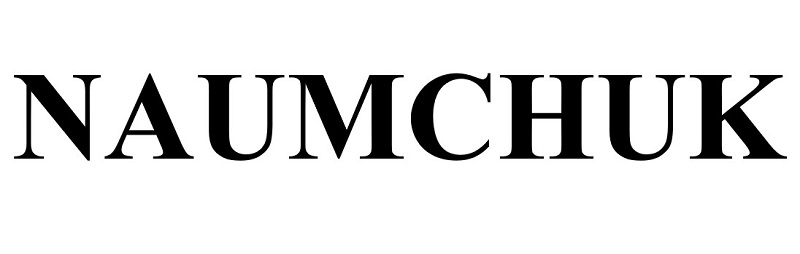
«NAUMCHUK», word mark, certificate No. 385493
classes 25, 35
- 7 March 2024 — application filed
- 29 August 2025 — preliminary conclusion: «is a surname»
- 2 March 2026 — reasoned response and request for restoration of rights
- 21 April 2026 — conditions for protection met for the full list
- 13 May 2026 — certificate No. 385493
Image from the UANIPIO register
A brand not yet on the market
The applicant has worked in clothing for more than fifteen years, but under other names: she already holds several registered Ukrainian marks for workwear, tactical gear and home textiles. NAUMCHUK was conceived as a separate line of branded civilian clothing under her own surname.
When we prepared the response, that line was not yet on sale: suppliers, equipment and collection concepts were still being arranged, and the launch had been postponed because of the war. There was therefore no way to show that consumers already knew NAUMCHUK as a brand. That matters for understanding what the response rested on.
The objection: «is a surname»
In its preliminary conclusion of 29 August 2025 the office found that, for all goods and services claimed, the sign «is usually devoid of distinctive character and has not acquired it through use». The reasoning took one sentence: the sign «is a surname, has no individual features and is therefore not capable of distinguishing the goods and services of one person from those of others».
The ground cited was the second paragraph of article 6(2) of the Law of Ukraine on Protection of Rights to Marks for Goods and Services (the Law), read with article 5(2) of the Law.
Taken to its conclusion, that reasoning would mean no surname could be registered without a device or other «individual features». The Law says otherwise.
What the law actually says
Ukrainian law does not exclude surnames. Article 5(2) of the Law expressly lists «words, including personal names» among the signs that may constitute a trademark, provided the sign is capable of distinguishing the goods or services of one person from those of others.
The Rules on drafting and filing trademark applications and on their examination (approved by Order of the Ministry of Economy of Ukraine No. 19889 of 6 August 2024; the Rules) give examples, in point 3 of chapter 2 of section II, of signs that are usually devoid of distinctive character: a letter or numeral in standard form, a line, a simple geometric shape, a colour, a long text that is hard to take in, a pictogram, a very simple or overly long sound, a picture of the goods themselves. Surnames are not among those examples.
The restriction on names in the Law concerns something else: surnames, first names, pseudonyms and their derivatives of persons well known in Ukraine cannot be registered without their consent (article 6(4) of the Law). The applicant's own surname is not that case.
Our response
The applicant had two months from receipt of the preliminary conclusion to respond. We built the response on two arguments, supported by 26 annexes.
First: the law does not exclude surnames. We relied on article 5(2) of the Law: a surname may be a trademark if it distinguishes the goods and services of one undertaking from those of others.
Second: this surname is already linked to a specific person and her business. We showed that the applicant has worked in the clothing industry since 2011, first through her own company and since 2020 also as a sole trader. We filed data from the state business register, information on her participation in public procurement since 2016, certificates for her other marks in classes 25 and 35, pages from websites and social media, customer reviews, business directory listings and letters of thanks from military units for volunteer support. An online search for her name returns exactly this activity.
We also explained the plan behind the filing. NAUMCHUK is not a random word but a new clothing line continuing a reputation the applicant has already built. Consumers would therefore see the sign as another brand of the same producer.
And we did not embellish: the response stated plainly that commercial use of the sign had not yet begun, and explained why.
A missed deadline is not the end
The two-month deadline in this matter had to be missed: there were good reasons for it, not an oversight. The response was therefore filed together with a request for restoration of the applicant's rights in respect of the application, and the fee was paid.
The Rules allow this. If the time limit for responding was missed despite the applicant taking due care, rights are restored where, within six months after the time limit expired, the request is filed together with the response and the fee is paid. The request must state the good reasons for the delay (points 5 and 6 of chapter 2 of section VII of the Rules). Missed deadlines in Ukraine: withdrawal and restoration.
Better not to get there: if a response cannot be ready in time, the period can be extended by up to six months, provided the extension request is filed before it expires (point 1 of the same chapter).
Outcome
- on 21 April 2026 the office concluded that the sign meets the conditions for protection for all goods and services applied for;
- the specification was not narrowed: all 202 items in class 25 and 169 in class 35 remained;
- certificate No. 385493 was published on 13 May 2026 and runs until 7 March 2034.
Seven weeks passed between the response and the decision. The conclusion does not say which arguments persuaded the examiner; it only records that the sign meets the conditions for protection.
Our view: why it worked
The decision gives no direct answer, so what follows is our assessment.
Acquired distinctiveness was a difficult route here. The last paragraph of article 6(2) of the Law allows registration of a sign that is usually devoid of distinctive character if it acquired distinctiveness through use before the filing date. NAUMCHUK as a brand had not been used before filing.
In our view two things decided the matter. First, the rule itself: a surname is not among the signs that «usually» fail to distinguish goods, and the Law expressly admits personal names. Second, the context: the surname belongs to a person who has long and openly worked in this very field, and for her customers it already points to a particular producer.
Similar reasoning prevailed before the Appeal Chamber in the case of a blogger's pseudonym: a sign by which consumers recognise a specific person has distinctive character. The difference is one of scale: that was a well-known influencer, this is an entrepreneur known in her industry. The pseudonym case.
Practical points
A surname objection can be answered. Ukrainian law expressly admits personal names; an objection that a sign «is a surname» is a reason to respond, not to abandon the filing. Responding to a provisional refusal in Ukraine.
Gather evidence of the link between the name and the business early. Websites, social media, shops, press coverage, reviews, other registered marks of the same owner: these become the annexes to the response. For a foreign client, collect evidence relating to the Ukrainian market where possible.
The strongest position is a brand already in use. If the sign is used before filing, acquired distinctiveness becomes available as an additional argument.
Watch the time limits. Two months to respond; an extension only if requested before expiry; restoration of rights is a last resort that requires good reasons and a fee.
Know the limits of such a mark. It does not allow the owner to stop others from using their own names in good faith (article 16(6) of the Law). And the surname of a person well known in Ukraine cannot be registered at all without that person's consent.
Questions and answers
Can a surname be registered as a trademark in Ukraine?
Yes. Article 5(2) of the Law of Ukraine on Protection of Rights to Marks for Goods and Services expressly lists words, including personal names, among the signs that may constitute a trademark, provided the sign distinguishes the goods and services of one undertaking from those of others. Surnames, names and pseudonyms of persons well known in Ukraine cannot be registered without their consent (article 6(4) of the Law of Ukraine on Protection of Rights to Marks for Goods and Services).
What if the examiner says a surname lacks distinctive character?
File a reasoned response within two months of receiving the preliminary conclusion. Rely on article 5(2) of the Law of Ukraine on Protection of Rights to Marks for Goods and Services and file evidence that the surname is linked to the applicant and its business: websites, social media, shops, publications, other marks of the same owner. In this case such a response saved the whole specification.
Can the owner of a surname mark stop namesakes from using their own name?
No. Under article 16(6) of the Law of Ukraine on Protection of Rights to Marks for Goods and Services, the owner's exclusive right does not extend to good-faith use by other persons of their own names.
What if the deadline to respond has already been missed?
Rights can be restored: within six months after the time limit expired, file a request together with the response, state the good reasons for the delay and pay the fee (points 5 and 6 of chapter 2 of section VII of the Rules approved by Order of the Ministry of Economy of Ukraine No. 19889 of 6 August 2024). If the time limit has not yet expired, it can be extended by up to six months by a request filed before it ends.
If your client faces a refusal in Ukraine
We prepare responses to preliminary conclusions and Madrid provisional refusals, including objections to surnames and personal names, review specifications before filing, and run clearance searches against the Ukrainian register. More on how we work with IP firms.
Send us the office action — we will tell you how strong the objection is. Or write to info@patent.rv.ua.
Source: file of Ukrainian application No. m202404783. Trademark record in the UANIPIO register. The provisions cited are those of the Law of Ukraine on Protection of Rights to Marks for Goods and Services in the version of 26 February 2026 and of the Rules in the version of 18 September 2024. Quotations from office documents are our translation.
Rivnepatent represented the applicant in this matter; the applicant's representative was Yurii Trachuk, Ukrainian patent and trademark attorney. We do not give the applicant's first name; the application data are available in the public register, and the arguments of the response are summarised without personal data. This material is for information only and is not legal advice.
Author: Volodymyr Tarasiuk, Ukrainian patent and trademark attorney, Reg. No. 529
See also: Free Ukrainian trademark search · Missed deadlines in Ukraine