A case from our practice
A Ukrainian organic berry grower applied to register the composite mark «Bio BERRY» for fruit, vegetables, berries and products made from them. The examiner found that both words promise the buyer more than is there: «Bio» suggests an organic product, «Berry» suggests berries. We showed organic production certificates and the actual product range — and the mark was registered for the full specification.
The case in brief
- Sign: composite: the words «Bio BERRY» and a hedgehog carrying a strawberry; Ukrainian application No. m202503534 of 27 February 2025;
- Applicant: an individual who grows organic berries through his company;
- Specification: 51 items in Nice classes 29 and 31: fresh and processed fruit, berries, vegetables, mushrooms, jams, flowers, hops, animal feed;
- Objection: the sign may mislead as to part of the class 29 and 31 goods;
- Outcome: certificate No. 395442 of 28 October 2026 for the full specification.
The applied-for sign
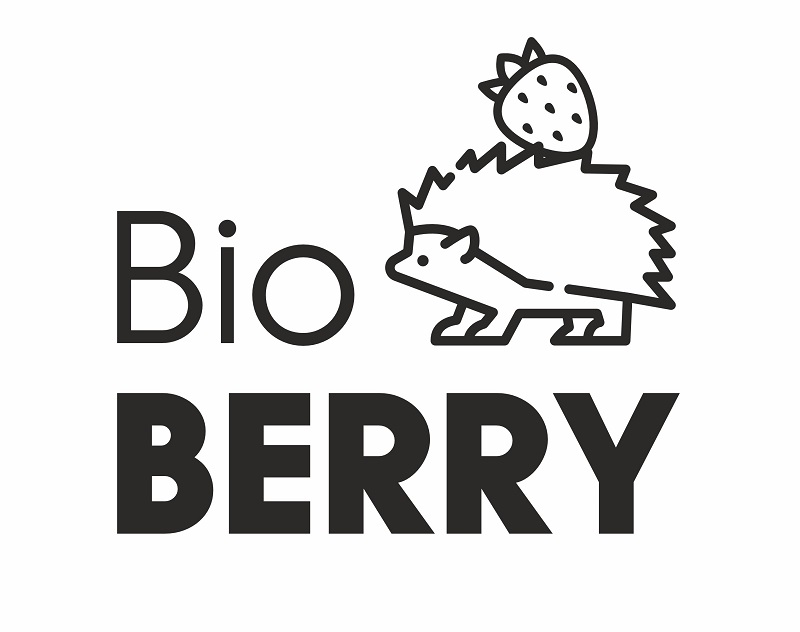
«Bio BERRY»
application No. m202503534 of 27 February 2025, now certificate No. 395442; classes 29, 31
Image from the UANIPIO register
The objection: «bio» and «berry»
The preliminary conclusion of 3 July 2026 relied on paragraph five of article 6(2) of the Law of Ukraine on Protection of Rights to Marks for Goods and Services (the Law): signs that «may mislead as to goods or services, in particular as to their properties, quality or geographical origin» are not registered. The examiner also cited point 2 of chapter 2 of section II of the Rules approved by Order of the Ministry of Economy of Ukraine No. 19889 of 6 August 2024 (the Rules). There were two objections.
- «Bio». The sign «may mislead for goods of classes 29 and 31 that do not meet the definition of «bio»». The examiner explained that «only agricultural and food products that consist 100% of ecologically clean ingredients and are subject to strict control» receive the «bio» label;
- «Berry». The sign «may mislead as to goods of classes 29 and 31 that cannot be classed under the general notion of «berry»». The specification included mushrooms, vegetables, flowers, hops and livestock feed.
Why one word is enough for a refusal is explained in point 10 of chapter 2 of section II of the Rules: «A sign is recognised as capable of misleading if at least one of its elements is capable of misleading». A sign is misleading if it «directly or through associations indicates a kind of goods and/or their characteristics that do not in fact correspond to reality».
Our response
We did not dispute that «Bio» evokes organic products and «Berry» evokes berries. The key words in the provision are the last ones: the associations must not correspond to reality. So we focused on evidence that they do.
On «Bio». The applicant's company is certified for organic production. We filed the certificates issued by the certification body Organic Standard and the list of certified products. We also pointed out that the law sets no «100% ecologically clean ingredients» test: organic status is defined by a set of requirements for land, cultivation, control, certification and labelling under the Law of Ukraine on Basic Principles and Requirements for Organic Production, Circulation and Labelling of Organic Products. The same law governs when products may carry words with the prefix «bio-» — it ties «bio» to real organic status rather than prohibiting it.
On «Berry». The sign is composite and is perceived as a whole, not as a statement that every product under it is a berry. The applicant's main business is growing berries, so the word is truthful. At the same time the certified range is already wider: it includes rhubarb, buckwheat and valerian. «Bio BERRY» works as the name of an organic producer, not as a description of each product.
We also filed regional and trade press coverage of the farm, invoices and letters from 2022 to 2026 bearing the sign, showing that a specific producer stands behind the name. The specification was not narrowed.
We filed the response on 2 September 2026, within the two-month period set by point 3 of chapter 8 of section VI of the Rules.
Outcome
- on 28 September 2026 the examiner concluded that the sign meets the conditions for protection for all goods applied for; the office decided to register the mark the same day;
- on 28 October 2026 the trademark was registered under certificate No. 395442; it runs until 27 February 2035 and can be renewed;
- the specification was not narrowed: 23 items in class 29 and 28 in class 31, including mushrooms, vegetables, flowers and hops, all stayed in the certificate.
Our view
The examiner's conclusion does not explain which arguments persuaded; it only records that the sign meets the conditions for protection. The decision gives no direct answer, so what follows is our assessment.
On «bio». In Ukraine «bio» on food is not just marketing: a separate law regulates its use. For the examiner it is a signal to check whether real organic status stands behind it. Organic production certificates are the most direct evidence that the association is true. Without them the response would have been much weaker.
Registration is not a labelling licence. The certificate covers the whole class 29 and 31 specification, while organic status is confirmed by certificates for specific products. A trademark protects the name; it does not allow any product to be labelled as organic. Article 34(11) of the Law of Ukraine on Basic Principles and Requirements for Organic Production, Circulation and Labelling of Organic Products expressly treats the use of words with the prefix «bio-» on non-organic products as «deception of the buyer or customer». The owner has to watch which goods carry «Bio BERRY».
On «berry». The specification also covers goods that are not berries. In our view several factors worked together: a composite sign with a fanciful hedgehog, a name that coincides with the producer's name, and a genuinely wider range. Had the range been limited to berries, mushrooms and vegetables in the specification would have been harder to justify.
Practical points
«Bio», «eco», «organic» in a name — have the certificates ready. The Ukrainian examiner is very likely to ask whether such words are true. It helps to have organic certificates at hand already at filing. See Responding to a provisional refusal from the Ukrainian IP office.
A product word in the name narrows the specification. If the name contains «berry», «milk» or «meat», the examiner will check each item of the specification against it. Think about the specification before filing.
Show the real range. Certificates, invoices and press coverage persuade better than general arguments. We used similar logic — a true association is not misleading — in the CZECH SOKIL case.
Questions and answers
Can a trademark containing «bio» be registered for food products in Ukraine?
Yes, but the examiner will check whether the word misleads. Under article 6(2), paragraph five, of the Law of Ukraine on Protection of Rights to Marks for Goods and Services, signs that «may mislead as to goods or services, in particular as to their properties, quality or geographical origin» are not registered. In this case the objection was cleared by organic production certificates showing that the «bio» association is true.
Can a whole mark be found misleading because of one word?
Yes. Point 10 of chapter 2 of section II of the Rules approved by Order of the Ministry of Economy of Ukraine No. 19889 of 6 August 2024 states: «A sign is recognised as capable of misleading if at least one of its elements is capable of misleading». That is why we had to answer separately on «Bio» and on «Berry».
Does registering a «bio» trademark give the right to label products that way?
No, these are separate matters. The Law of Ukraine on Basic Principles and Requirements for Organic Production, Circulation and Labelling of Organic Products governs labelling on its own terms: article 34(11) treats the use of words with the prefix «bio-» on products not obtained through organic production as «deception of the buyer or customer». A trademark protects the name but does not exempt the owner from labelling requirements.
How long is the response period and how long did the case take?
A reasoned response is due within two months of receipt of the preliminary conclusion (point 3 of chapter 8 of section VI of the Rules approved by Order of the Ministry of Economy of Ukraine No. 19889 of 6 August 2024). The preliminary conclusion was dated 3 July 2026, we filed the response on 2 September 2026, the conclusion that the sign meets the conditions for protection and the decision to register are dated 28 September 2026, and the trademark was registered on 28 October 2026.
If your client faces a refusal in Ukraine
We prepare responses to preliminary conclusions and Madrid provisional refusals, including objections that a sign is misleading, and gather the evidence the Ukrainian office accepts. More on how we work with IP firms.
Send us the office action — we will tell you how strong the objection is. Or write to office@rivnepatent.ua.
Source: file of Ukrainian application No. m202503534. Certificate No. 395442 in the UANIPIO register. The provisions cited are those of the Law of Ukraine on Protection of Rights to Marks for Goods and Services in the version of 26 February 2026, of the Rules in the version of 18 September 2024 and of the Law on organic production in the version of 2 March 2026. Quotations from office documents and laws are our translation.
Rivnepatent represented the applicant in this matter; the applicant's representative was Yurii Trachuk, Ukrainian patent and trademark attorney. We do not give the applicant's name; the data on the application and the mark are available in the public register. This material is for information only and is not legal advice.
Author: Volodymyr Tarasiuk, Ukrainian patent and trademark attorney, Reg. No. 529
See also: CZECH SOKIL: a letter of consent against a misleading-producer objection · Responding to a provisional refusal from the Ukrainian IP office