A case from our practice
The Ukrainian office refused protection for every service in classes 40 and 42, citing an earlier international registration «artColor» owned by a German manufacturer. We filed a reasoned response, and the mark proceeded to registration for the entire list without a single deletion.
The case in brief
- Sign: composite, in colour: a multicoloured spectrum wheel above the word «ArtColor»; Ukrainian application No. m202506067 of 7 April 2025;
- Applicant: a Ukrainian artist and designer whose projects include illustrations, colouring books, posters, comics, board games and digital products;
- Specification: seven Nice classes (9, 16, 28, 35, 40, 41, 42), close to 800 items;
- Outcome: certificate No. 394832 for all goods and services applied for.
Building the specification
Our pre-filing search turned up several registered signs containing «Art» and «Color». We therefore advised filing a composite mark rather than a word mark: the colour wheel is what gives the sign its distinctive character. Word, composite or figurative: what to file in Ukraine.
The specification was the harder part. Modern creative work does not fit neatly into the Nice Classification: one idea may become a book, a mobile app, a board game, an NFT, a souvenir or a print. Many items, such as presets, mock-ups, patterns, LUT files and laser-cutting templates, do not appear in the standard lists at all.
Class 40 was added at the applicant's request, to cover the production of his own design items: printing, engraving, 3D printing. That is the class that later came under fire.
During formal examination the office raised 49 points, asking for clearer wording of non-standard items and for the colours to be named. We restated the list in classification language within the main constraint at that stage: the specification can be clarified or narrowed, never broadened. The second notification had 13 points, and most of our wording had been accepted.
The citation: «artColor» for roofing and façades
In its preliminary conclusion of 16 July 2026 the office found the sign confusingly similar, for all services in classes 40 and 42, to the mark «artColor» under international registration No. 1408192 of 6 February 2018, protected in Ukraine. The holder is a German company producing metal roofing, façade cladding and rainwater systems.
The ground was article 6(3) of the Law of Ukraine on Protection of Rights to Marks for Goods and Services: a sign cannot be registered if it is identical or confusingly similar to a mark earlier registered in Ukraine in the name of another person for the same or related goods and services.
The objection was not without basis:
- the word elements sound the same, «ArtColor» and «artColor»;
- class 40 contained literal overlaps: «metal treating», «grinding», «abrasive polishing»;
- in class 42 the applicant claimed architectural services and construction design, while the earlier holder designs roofs and façades.
The signs the examiner compared
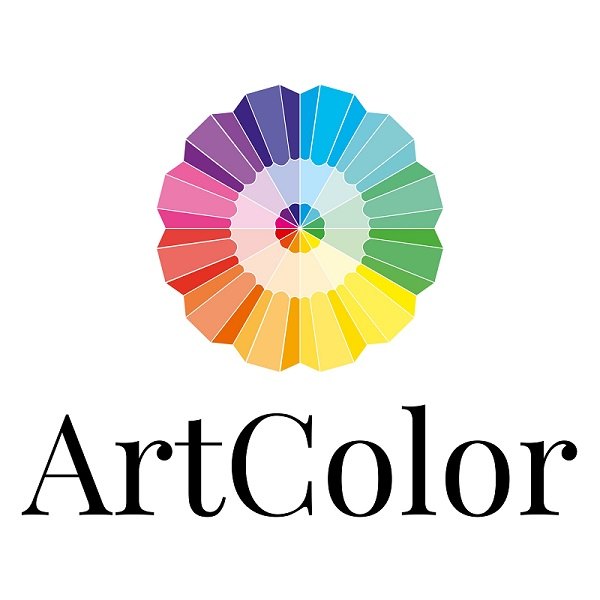
Applied-for sign
«ARTCOLOR» (fig.), certificate No. 394832
classes 9, 16, 28, 35, 40, 41, 42
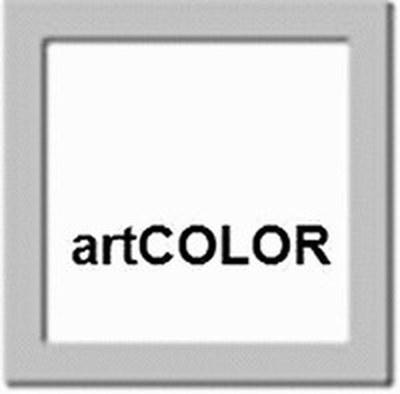
Cited mark
«artColor», international registration No. 1408192
classes 6, 37, 40, 42
Images from the UANIPIO register and WIPO Madrid Monitor
Our response
The applicant had two months from receipt of the preliminary conclusion to respond. We did not narrow the list; the response rested on three arguments.
First: the services differ in substance, not in name. We compared them on five criteria: purpose, nature, field of use, materials and the relevant public. The earlier holder's services are processing of metal sheet for roofing, façades and ventilation, roof design and metallurgical analysis, aimed at professionals in construction. The applicant's are printing, engraving, framing of works of art, embroidery, graphic design and 3D graphics, aimed at people buying creative and decorative products. Even the literally identical items, such as «metal treating», are for the applicant only a way of producing a design object, not an industrial service.
Second: the signs look different. The words sound alike, and that argument alone would not have been enough. Combined with the difference in services, it carries weight: a multicoloured spectrum wheel against a monochrome grey square frame, different typefaces, different composition. A consumer seeing the two signs would not take them to come from the same undertaking.
Third: the sign is already in use. The applicant has used it openly in his creative work since 2024, on his own website, on social media and on a video platform, with no conflict with the earlier holder in that time. Use is not a ground for registration in itself, but it shows good faith and the real market context in which consumers meet the sign.
Outcome
- on 23 September 2026 the office concluded that the sign meets the conditions for protection for all goods and services applied for;
- this includes the class 40 items that literally coincide with the earlier specification;
- certificate No. 394832 was published on 14 October 2026 and runs until 7 April 2035.
A little over two months passed between the preliminary conclusion and the final one. None of the nearly 800 items was deleted.
Practical points
A preliminary conclusion is not a final refusal. It is the office's invitation to state your case, and a well-argued response can save the whole specification. Responding to a provisional refusal in Ukraine.
Relatedness is assessed on substance. Identical wording in two specifications does not by itself make the services related. What decides is who provides them, to whom and for what purpose.
For holders of international registrations, the same logic cuts the other way. An IR designating Ukraine will be cited by the examiner against later filings, but its reach is limited to the same or related goods and services. Overlapping wording in a specification is not enough on its own.
Draft non-standard items precisely from the start. The list cannot be extended after filing, and vague items turn into dozens of points in office actions.
A composite mark adds an argument. When the words are close, a distinctive device can make the difference. Compare the DEKSIL case, where similarity was found and the appeal turned on the goods being unrelated.
Questions and answers
What should an applicant do after a preliminary conclusion of refusal in Ukraine?
File a reasoned response within two months of receiving the preliminary conclusion. It may set out arguments for registration and, if needed, narrow the specification within the goods and services already claimed. In this case the list was not narrowed: the office accepted the arguments.
Can a sign similar to an earlier mark be registered in Ukraine?
Yes, if the goods and services are not related. Article 6(3) of the Law of Ukraine on Protection of Rights to Marks for Goods and Services bars similar signs only for the same or related goods and services. Here identical pronunciation did not prevent registration, because the services of the applicant and of the earlier holder differ in purpose, nature and relevant public.
Do the services objected to have to be deleted?
No. Deletion is only one option. In this case the applicant kept every service in classes 40 and 42, including those that literally coincide with the earlier specification.
Does prior use of the sign help?
Use alone is not a ground for registration. It does show the applicant's good faith and the real market context: who the consumers are and how they perceive the sign. Together with the arguments on unrelated services and visual difference, it strengthens the response.
If your client faces a refusal in Ukraine
We prepare responses to preliminary conclusions and Madrid provisional refusals, review specifications before filing, and run clearance searches against the Ukrainian register. More on how we work with IP firms.
Send us the office action — we will tell you how strong the objection is. Or write to info@patent.rv.ua.
Source: file of Ukrainian application No. m202506067. Trademark record in the UANIPIO register. International registration No. 1408192 in WIPO Madrid Monitor. The provision cited is article 6(3) of the Law of Ukraine on Protection of Rights to Marks for Goods and Services, in the version of 26 February 2026.
Rivnepatent represented the applicant in this matter; the applicant's representative was Yurii Trachuk, Ukrainian patent and trademark attorney. We do not disclose the applicant's name or correspondence; the application data given here are available in the public register. This material is for information only and is not legal advice.
Author: Volodymyr Tarasiuk, Ukrainian patent and trademark attorney, Reg. No. 529
See also: Free Ukrainian trademark search · Madrid designations in Ukraine